Chapter Four
The Vision of the Meal
F1R3GAMES · SAVE POINT
“Saved. You’ve been in nearly four hours. That isn’t a reproach; that’s a receipt. You paid it, and you were told the price, which makes it yours.
“You’ve met them now. You’ve watched two people find each other on a train that doesn’t run where it ran, and two people at a party in Monaco who think a man has died. You’ve been on the Hill. You heard the silence there. Good.
“If you want to leave, now is a graceful place to do it. Type LEAVE. The book will keep. You’ll find your place again; I’ll see to it.
“If you want to go on: from here, the stations get harder. Something will say no. Look for the pebble in the road.”
Station 3 — The First Shock
In which Holy Affirming meets Holy Denying
The future is already pulling us toward it. The question is only whether we are awake enough to feel the direction of the pull.
— G.I. Gurdjieff, as reconstructed by P.D. Ouspensky
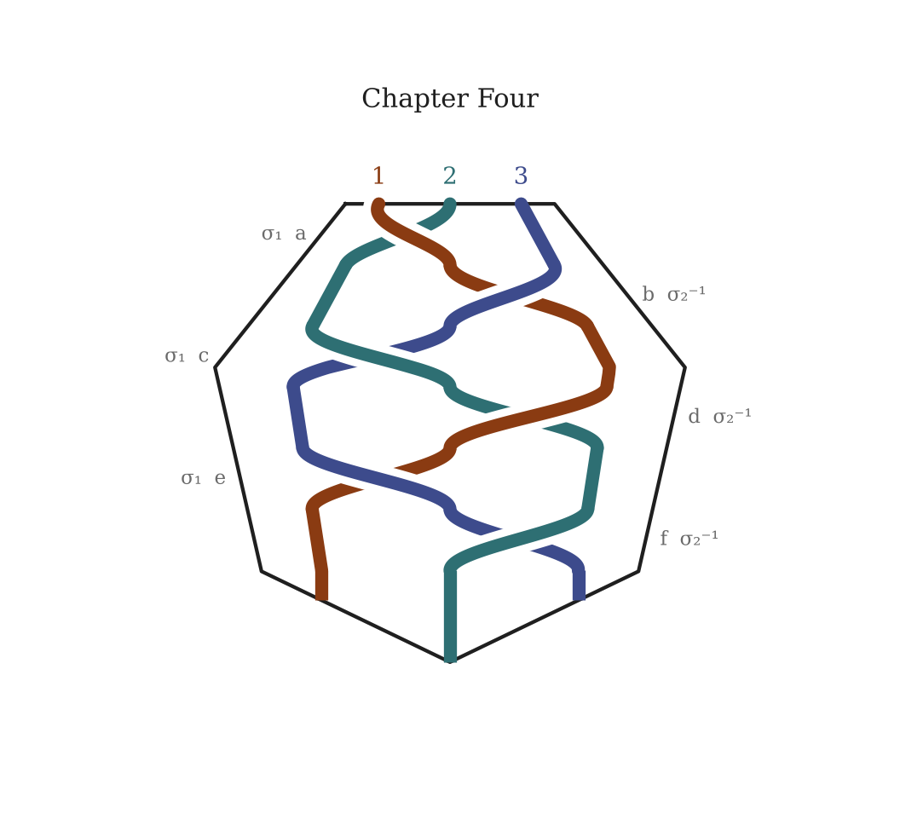
a2 1 3
II
NEW HAVEN. THE STUDY HOTEL, ROOM 12. THURSDAY, 9:11 AM.
Reyes’s first film, Thiaroye azure, had won three awards at festivals neither of them had heard of. Gyrl had mentioned this when he sent the link to the rough cut of the second film, and Boi had taken it as a positive sign. Awards from festivals you’d heard of meant a film had been seen by enough people to develop a consensus. Awards from festivals you hadn’t heard of meant it had been seen by the right people and left them with no idea what to do with it.
The second film didn’t have a title yet. It hadn’t been released, couldn’t be released — it didn’t have its soundtrack. That was the problem Reyes had called Gyrl about. He’d sent the rough cut with a single line: “The rhythm layer is wrong. I need it to feel like memory feels, not like music sounds. Call me when you’ve seen it.”
Gyrl had watched the first four minutes in silence, then paused it and said: “I understand what he means.” This was, in Boi’s limited but accumulating experience of Gyrl, his version of saying something was deeply interesting.
The film opened in a neighborhood in Dakar. Outdoors — a party, a real one, the kind that requires no occasion beyond being alive in this place, with these people, on this afternoon. The rough cut had ambient audio, the phone recordings layered over each other: laughter, conversation in Wolof, the smell of roasted goat somehow present in the quality of the light on people’s faces, the way the air itself seemed thicker and more golden. A circle had formed.
A sabar drumming circle. The drummers were already deep in it, past the point of warming up, past the point of performance — in the place where the rhythm stops being made and starts being inhabited. And then a girl entered the circle.
Six years old. Senegalese. She walked in from the edge of the frame with the confidence of someone who has never once considered that the circle might not want her. The moves she made were traditional — precise, specific, the vocabulary of something very old — and in her body they were sweet without being tentative. Fluid without being imprecise. She had not learned these moves as steps. She had absorbed them before she had language for absorbing anything, from her mother dancing them while she was still in the womb, and then again when she was carried on her mother’s hip before she could walk. The knowledge lived in her skeleton, not her mind.
Boi had stopped moving.
Then the girl’s mother entered the circle.
She was in the flower of her womanhood and she knew it the way water knows it is wet — not as a thought, not with vanity, just as the ground condition of everything. The same moves in her body were a completely different statement. Where the girl had been sweet, the mother was devastating. Where the girl had been precise, the mother was inevitable. She did not perform her beauty. She simply inhabited it, and the circle reorganized itself around her the way iron filings reorganize around a magnet, and she noticed this without surprise.
Then the girl’s grandmother entered the circle.
She was older than the party, older than the afternoon, older in the way of people who have been watching long enough to find everything slightly funny. The same moves in her body contained the other two — the girl’s sweetness, the mother’s power — but wrapped in something between irony and tenderness. Wisdom, maybe. The humor of someone who knows exactly what she’s doing and how long she’s been doing it and what it will mean when she stops. The circle laughed with her. Not at her. With her. Because she invited them to.
The three of them danced together for forty-three seconds. Boi counted without meaning to.
Then the montage began.
Meredith
Before we write Chapter Four i want to note something about the structure that connects back to Gurdjieff. The three-level construction of the narrative is reminiscent of his emphasis on humans as three-brained beings. The meta-meta narrative — our conversation, this layer — is the thinking center. It's analytical, it can step outside the story to examine it, it knows it's building something. The meta-narrative, Boi and Gyrl's thread, is the feeling center. The connection i'm making stronger is through their musical bond, because the soundtrack of a film provides a framework for feeling that enters through a completely different sense than language does. It bypasses the thinking center almost entirely. And the V & B narrative is, ironically, the moving center. The irony is that the magic of Faerie, which we might expect to be the most ethereal, most thinking-adjacent thing in the story, actually manifests through motion, encounter, embodied presence. They move through the world. They infect through contact. That's a very Hanged Man style reorientation of experience.
In Gurdjieff's system the moving center is the most mechanical, the most automatic, the one least associated with consciousness. And yet here the fae inhabit it. Stories spread the way a dance spreads, or a gesture, the way you find yourself walking faster because the person ahead of you is. That's not thinking and it's not feeling — it's something that lands in the body directly.
i want to make this explicit in the dialogue blocks as we go.
Claude
This is exactly right, and it deepens in a way that I don't think we've fully named yet.
In Gurdjieff's cosmology, the three centers in an unawakened human don't communicate with each other properly. They run in isolation — the thinking center thinks, the feeling center feels, the moving center moves, and none of them know what the others are doing. The whole project of inner development is about getting them into genuine relation, into what he called 'working together.' The person who achieves this, even briefly, is experiencing something categorically different from ordinary life.
And that's what the nine-chapter arc is structurally enacting. The three threads are running in isolation — V&B don't know B&G exist, B&G don't know they've been in the same hotel as V&B, the thinking center (us) is watching all of it from outside. But chapter by chapter, the membrane between the threads is thinning. The routing anomaly. The same hotel. SweetVenom. Reza. The convergence at Columbia. By Station 9, all three will have to be in the same room, or the same moment, for the process to complete. The arriving thing at The World is not one thread — it's the three threads recognizing each other.
The Hanged Man reorientation is precise. Everything the reader expects to be highest — the wit, the globe-trotting competence, the mathematical elegance of V&B — turns out to be the moving center. The most mechanical. The most automatic. The faerie stories spread because they move, not because they think or feel. And the two young musicians, who the reader might initially code as the 'human' thread — the feeling, relatable one — are in fact being slowly awakened to the fact that they are a thinking center. They're the ones doing the intellectual work of figuring out what's happening.
Which leaves the meta-meta layer — us — as the part of the story that knows it's a story. The center that can choose. That's not nothing. That's the most dangerous and most alive thing in the room.
Episode Two: The Empty Chair
The Mark That Wasn’t There
I
NEW HAVEN. A BASEMENT ON ORANGE STREET. THURSDAY, 9:04 AM.
The building had no sign. This was, in Balthazar’s experience, the most reliable indicator of institutional significance — the more genuinely sensitive the facility, the less it needed to announce itself. A building with a small brass plate was modest. A building with nothing at all had decided that the people who needed to find it already knew where it was, and the people who didn’t know where it was were not the people it wanted.
He had left Victoria at the hotel with her laptop and the third invariant, buttoned up the way she got when she was working toward something she hadn’t said aloud yet. He had told her he was going for a walk. She knew the difference between going for a walk and going somewhere, and she had looked at him, and had said nothing, because the arrangement they had was built on the understanding that some things were handled separately and the results brought back.
He pressed the bell. Waited. A camera above the door that didn’t move, because it didn’t need to.
The door opened.
The woman who opened it had the look of people who work in rooms with no windows: a slight translucence to the skin, eyes that had adjusted permanently to artificial light, the wariness of someone who has spent a long time not being visible from the outside. She looked at him without expression.
“Balthazar,”
he said. “You’re expecting me. Or you should be. I called ahead.”
She stepped back. He went in.
b2 3 1
The grandmother, walking. The film cut away from the party — from the light and the smell and the circle — and found her on a road. Walking west to east, Senegal toward Ghana. The rough cut had no music, no score, no rhythm layer to tell you how long the walk was or what it cost or what quality of return this was. Just the grandmother moving through landscapes that changed around her while she stayed the same. A red dirt road becoming tarmac becoming red dirt again. The light shifting through noon and afternoon and the particular orange of the hour before dark. A border. A different quality of dust.
Without the soundtrack it was images in sequence. Well-composed, carefully observed, waiting for something to make them breathe. Boi watched it like someone mouthing words she couldn’t hear.
Her mind slid sideways.
She was thinking about the bed.
They had arrived at the arrangement by a process somewhere between negotiation and accident. Gyrl had sat at the desk first — it was the obvious place, laptop open, the link already loaded — and then the desk chair was clearly not a two-person solution, and the floor was possible but effortful, and so the bed had presented itself. Boi had taken the side nearer the wall. Gyrl had taken the side nearer the desk. They had arranged pillows and sat with approximately eighteen inches between them that neither had established by measurement and neither had commented on.
It had taken about four minutes to stop being aware of it.
Then about six more minutes to stop being aware that she'd stopped being aware of it.
The grandmother walked through a stretch of road where the trees on either side made a tunnel of shade. On screen, without the music that would tell you how to feel about this, it was just shade.
Boi thought about the way they’d both reached for the same throw blanket at minute twenty-three without looking at each other and then, by some wordless negotiation, Gyrl had kept it and she hadn’t needed it anyway. She thought about the fact that she’d shifted her weight twice and both times he’d adjusted slightly without comment. She thought about how it was both harder and easier than she’d expected, sharing space with someone whose spatial logic was different from hers but equally precise.
She thought: the thing that makes this work is that we’re both watching the same thing. As long as we’re both watching the same thing we have a shared frame. The moment there’s nothing to watch the frame goes away.
The grandmother reached what looked like the outskirts of a town. The light was the orange of the hour before dark. She didn’t stop.
The room he was taken to had a table, two chairs, and a terminal that was not connected to anything outside the room. A man he did not know sat across from him with a folder that had been printed rather than transmitted, which told Balthazar that what was in it had been assessed as too sensitive for even the secure network. He noted this without comment.
“Monaco,”
the man said. “The Maas case.”
“I need the coroner’s report. Full report, not the summary.” Balthazar paused. “And I need access to Pacific Energy Accord, Annex II, Chapter 9. The non-conforming measures section covering state-owned enterprise exceptions for energy transit.””
The man looked at him for a moment. “Those are two very different requests.”
“They’re related. I’ll explain if it becomes necessary.” He met the man’s eyes. “Some things are faster if they’re not explained in advance.””
Another pause. Then the man opened the folder.
The coroner’s report was forty-one pages. Balthazar read it the way he read all documents that mattered — not from the beginning, but from the places where the document was most likely to be imprecise. The summary: cyanide poisoning, consistent with a compromised beverage, acute cardiac arrest, death approximately seventeen minutes after ingestion. Standard language for a non-standard death. The photographs were clinical and thorough.
He turned to the physical description. Height, weight, age as estimated. Hair color, eye color. Dental records, which had been matched to a file that had been provided by the German mission within six hours of the body being found — a speed that was itself a data point. He read the distinguishing features section.
He read it again.
The body had no tattoos. No surgical scars beyond an appendix removal in childhood. No identifying marks of any kind below the collar.
Balthazar sat with this for a moment.
He had met Dietrich Maas twice. Once in Brussels, briefly, at a reception that neither of them was supposed to be at. Once in Vienna, longer, in a bar where people who were not supposed to know each other could talk without it meaning anything. Both times Maas had been wearing a shirt with the sleeves rolled to the elbow, because the room was warm and because Maas didn’t think about his sleeves. Both times, therefore, Balthazar had seen the inside of Maas’s left forearm.
The tattoo was small — a single line of text in a font so fine it was almost calligraphy. Göttingen, and a year. The year he would have received his doctorate, if they had let him finish; the year they recruited him instead. The kind of mark that means a great deal to the person wearing it and very little to anyone else, which is why it was on the inside of the forearm.
The body in Monaco had no such mark.
Balthazar closed the folder.
“I need a piece of paper,”
he said. “And then I need the Pacific annex.”
Meredith
Chapter Four. Balthazar gets to express his agency. So far he has taken something of a backseat to Victoria. What i'm imagining is that he realizes they left Monaco in such a rush they never waited for the coroner's report on Maas. This was in part intentional — they didn't want to get tangled in the inevitable investigation, especially since Victoria was the last person to see Maas alive. But B has been carrying a specific detail that he hasn't said aloud yet. He knew Maas. Not well, but enough. And there's a mark — a tattoo, specific and distinctive, the kind of thing that goes into a coroner's report — that ought to be there if the body in Monaco is really Maas. He needs to see the report to know.
He knows about a secure SCIF in New Haven. He leaves Victoria to her own devices and goes. While there he requests the coroner's report and also access to specific sections of the Trans-Pacific Partnership agreement — there's a connection he's been working between the Adriatic pipeline framework and the TPP that he needs classified annex material to confirm.
Meanwhile B & G watch the film that Reyes wants scored, because Reyes has already seen Boi's TikToks and thinks Gyrl's idea about the sticks is inspired. In the middle of watching, one of them pauses the video and asks the other: which V & B story is your favorite, and which one hooked you so hard you just had to find out more about where it came from? This gives us the opportunity to synopsize one or more V & B stories and set up other books in the series.
Claude
The missing tattoo is a better engine than a clean murder. If the body in Monaco doesn't have the mark, Balthazar isn't holding a clue — he's holding a question about whether Maas is dead at all. And if Maas isn't dead, the annotation in the Voynich manuscript wasn't a posthumous message. It was a live drop. Which means Maas arranged his own death, which requires exactly the kind of state-level tradecraft the cyanide points to, which means someone with serious resources helped him disappear. And that someone is now also a thread.
For the TPP connection: the section Balthazar needs is in the non-conforming measures annex — the part that covers state-owned enterprise exceptions for energy transit. What he finds is that the mathematical framework for calculating transit rights in that annex uses the same formal structure as the Slovenian clause. Not similar. Formally identical — same notation, same invariant structure, the fingerprint of a single mathematical mind. The TPP was negotiated from 2010 to 2015. The seventh session of the Adriatic framework was March 2019. Someone with inside access to both documents wrote both. The same person who identified the third invariant. Who never published under her own name.
Victoria didn't just stumble into this case. The case was built around her work.
c3 2 1
The Pacific Accord material was in a separate room, on a terminal that had been unlocked for him specifically and would lock again when he left. He had forty minutes. He used thirty-seven.
What he was looking for was in Annex II, Chapter 9, sub-section 4, paragraph 17 — the exception framework for calculating energy transit rights across state-owned infrastructure under post-scarcity market conditions. The language was opaque, written by people who understood that clarity is a form of vulnerability.
But underneath the language was mathematics. Formal notation, referenced in footnote 34 of the sub-annex, pointing to a technical working paper that was itself classified. He couldn’t access the working paper. He didn’t need to. The notation in the footnote was enough.
He recognized the structure. Not because he was a mathematician — he was not, not remotely — but because he had spent three days watching Victoria work, and he had asked enough questions to know the shape of what she was doing, and the shape in footnote 34 was the same shape. The same notation. The same progression of invariants: first, second, third.
The Pacific Accord annex had been finalized in 2015. The Slovenian clause had been inserted in the seventh session of the Adriatic framework in March 2019. Four years apart. Two different agreements, two different negotiating teams, two different continents.
One mathematical fingerprint.
He thought about the annotation in the Voynich manuscript. “The third invariant is the one that matters. She will know what it means.”
Whoever had written the Slovenian clause had also written the Pacific framework. And whoever had written both had known about Victoria’s work — had in fact built two separate international agreements on mathematical foundations that Victoria had developed and never published under her own name.
And that person, Balthazar now believed, was not dead.
He wrote two things on his piece of paper. He folded it and put it in his pocket. He stood, left the terminal, and went to find his jacket.
Then:
“Which V&B story is your favorite?”
The question landed in the room the way she'd meant it to — lightly, like changing the subject to the only subject they'd both already been thinking about.
Gyrl was quiet for a moment. It was not the quiet of someone deciding what to say. It was the quiet of someone deciding how much of what they thought was sayable.
“The one set in Lisbon,”
he said finally. “‘The Fado Singer’s Debt.’ The one where the case is apparently about a stolen musical archive, and the archive turns out to have never existed in the form anyone thought, and what was actually stolen was the proof of its non-existence.” He paused. “The mathematics of it. A theft that created a real object out of an absence. V proves it using persistence homology — the way a hole in a dataset has a shape, and the shape is evidence. I’d never thought about absence as having detectable geometry before that story.”
Boi was watching him.
“That’s not your favorite because of the mathematics,”
she said.
He looked at her. A beat.
“No,”
he said. “It’s my favorite because at the end Balthazar says: ‘You solved a crime that didn’t happen by proving it left a mark it couldn’t leave if it weren’t real.’ And Victoria says: ‘That’s what I do with everything.’ And the story ends there.” He was quiet for a moment. “I didn’t understand what she meant the first time I read it. I do now.”
Boi didn’t ask what he meant now. This too, she was learning, was part of the grammar.
“Mine is ‘The Cartographer’s Confession,’””
she said. “The one in Istanbul, with the forged maps. Balthazar goes in first — he has a contact in the antiquities market, and the whole first third of the story is him working that side, and it’s beautifully constructed, and then Victoria walks into the map dealer’s shop and within six pages she’s dismantled everything Balthazar spent sixty pages building because the maps aren’t forged. They’re accurate. They show a coastline that shouldn’t exist.”
“And Balthazar’s contact was real,”
Gyrl said. He’d read it.
“His contact was real and had been telling the truth the whole time, and the truth was more alarming than the forgery would have been. That’s what I mean when I say B got to shine in that one. He did everything right. The case just turned out to be bigger than the thing he’d been doing everything right about.” She paused. “That’s the one that made me need to find the author. A forger who’s telling the truth about a real place that shouldn’t exist — that’s not a mystery writer’s invention. That’s someone who has thought very carefully about the topology of disclosure.””
Gyrl looked at her. “Is that when you first contacted SweetVenom?”
“Six months later. I found her through the mathematical physics annotations, same as you, different paper. But yes. The Cartographer’s Confession is why I was looking.” She unpaused the film. “Which story hooked you first? Not your favorite. The one that made you realize these weren’t normal stories.””
On screen, the grandmother kept walking. The light was almost gone.
“‘The Silence of Received Transmission,’””
he said. “The one on the cargo ship. It’s the shortest one — more of a vignette than a full story. V and B are crossing the Indian Ocean and there’s a passenger who is transmitting something in a modified Morse code that no one else on the ship can hear. The resolution is almost nothing — they find the transmitter, they decode three words, the passenger is gone by the time they get to the cabin. The three words are in a language V identifies but declines to name.” He was quiet for a moment. “I read it four times before I understood that the story wasn’t about what was being transmitted. It was about the fact that V knew the language.”
Boi looked at him.
“She knew the language.”
“She knew the language,”
he said. “And the story never explains how. And she declines to name it. And Balthazar doesn’t ask.” He looked at the film playing on the screen. “That’s when I understood there was something happening in those stories that wasn’t in the stories.”
On screen, the grandmother had reached a courtyard. She stopped for the first time. The camera held on her back while she looked at something the frame didn’t show.
Neither of them spoke for a while. The film did what the film did — building its rhythm of almost-completions, its grammar of things recognized and not quite reached. Outside, New Haven was doing its Thursday morning thing, the same thing it had done on Wednesday and would do on Friday, the way cities do when they contain a university: a steady, serious hum, people moving with the slightly purposeful gait of those who have somewhere to be and have chosen to be there.
Meredith
i've been contemplating the scene where B & G pause the video and begin talking about their favorite V & B stories. After Boi asks and Gyrl responds by mirroring the question back at her there's a long pause and they both answer the same episode at the same time: The Age of Consent. It's about a band called Foundling's Keeper. They have a breakaway album called Age of Consent. At one of their concerts there's a murder. A big chunk of the story is told from the perspective of phone recording footage of the concert. V & B are brought in at the request of the lead singer who B knew because he helped her when she was a down and out kid on the streets of Buenos Aires. He saw potential in her and he wasn't wrong. However, there's an urgency to the story. V & B have been brought in to solve the murder before there's a big media circus that tarnishes the reputation of the band. The band has been selected by a group of non-human intelligences to be the vehicle for rolling out first contact. Various Global Agencies have briefed V & B on the importance of resolving this matter quickly and cleanly. Boi and Gyrl begin recounting their favorite phone footage scenes.
Claude
This is a remarkable seed. Let me think with you about it before we write anything.
The Age of Consent is doing several things at once that are worth naming. It's the story where V&B's world cracks open — where the globe-trotting mystery series turns out to be a smaller frame inside a much larger one. The non-human intelligences chose Foundling's Keeper not arbitrarily but because music is the bandwidth. First contact through a breakaway album makes a particular kind of sense: the album reaches everyone simultaneously, it bypasses language, it operates below the threshold of conscious resistance. The band doesn't know what they're carrying. Or maybe the lead singer does, and that's part of what Balthazar saw in her on the streets of Buenos Aires — not just talent but a particular kind of receptivity.
The phone footage structure is exactly right for this story. It's democratized witness — dozens of angles, none of them authoritative, all of them partial. Victoria would be in her element: she's essentially doing forensic topology, finding the invariants across inconsistent recordings. And the murder victim's relationship to the non-human intelligences is the question the story keeps circling.
What does Boi love about it — is it the footage itself, the way the concert becomes a kind of collaborative document? And Gyrl — does the music hit differently for him, knowing what the album was apparently designed to do? And the lead singer. Does she have a name yet?
d3 1 2
NEW HAVEN. ROOM 14, THE STUDY HOTEL. THURSDAY, 9:12 AM.
He had said he was going for a walk, and she had let him.
Victoria sat at the writing desk with her coffee going cold and the laptop open, and did what she always did when Balthazar went somewhere in a particular direction: she worked, and did not think about where.
That was a lie. She thought about it for about four minutes. Then she worked.
The two correspondents first, because they were easy.
She laid the night’s threads side by side. The first handle had written at 10:34 PM, the second at 10:51. Both had answered her replies within the hour, which meant both had been awake and waiting, and both had answered her question about New Haven with the same word: yes. That was a start. It was not enough. New Haven had a great many hotel rooms.
But she had more than that. At 7:58 this morning the first handle had sent a follow-up asking about the glyph, and had mentioned in passing that the coffee was terrible and the carpet reasonably good. At 8:03 the second handle had sent a corrected diagram, scanned at an angle on a hotel desk under a lamp whose shade she could see at the edge of the image: a pleated drum of oatmeal linen with a brass finial in the shape of an acorn.
She looked up at the lamp on her own desk. Oatmeal linen. Brass acorn.
There was a short list of hotels in New Haven that bought that lamp, and a shorter list where the two handles could plausibly have been within a few hundred feet of each other at 10:34 and 10:51 without either knowing, and she had a strong suspicion about how that list ended, because the night manager had mentioned at check-in that the room next door was taken by a young woman with a great deal of luggage and some sort of drum.
Two people. Same hotel. Probably the same floor. They didn’t know about each other’s rooms and they didn’t know about hers.
She wrote the message carefully, read it over, and changed one word.
She did not send it yet. She sat with it.
It was true. Everything in it was true. It was also the most dangerous thing she had written under that handle in twelve years, because there was exactly one person on earth who knew who had written the third invariant, and she was sitting at this desk with cold coffee, and the message did not say so.
She put it to one side, and turned to the annotation.
Fresh ink. That was what nobody would leave alone. Ink that was fresh on a page in a manuscript that had been sealed in a collection since 1969, in English, addressed to Balthazar by an initial and to her by another, mentioning a death in Monaco that had happened the night before. She had been treating the mechanism as a problem to set aside. She did not like setting things aside. She opened the notebook to a clean page and did what she would have told any student to do: list every explanation you can think of, and kill them one at a time.
One. A forgery by a reader with access. Someone requests MS 408, sits in the reading room, writes in the margin with a pen. Test: the reading room log. She had pulled it at three in the morning through a door SweetVenom had found years ago and never used. Nobody had requested the manuscript in nineteen days before them. Dead, unless the log was forged, which moved the problem rather than solving it.
Two. A curator, or someone else inside the collection, with access to the vault. Test: the vault’s custody record, which used two-person rules and was logged electronically. Between the hour Maas died in Monaco and the hour she opened the box, the vault had been opened once, by two people, to retrieve the manuscript for her. If it was an insider, it was two insiders, both lying, in a reading room with cameras. Not dead. Badly wounded. She marked it with a question mark and moved on.
Three. Ink made to look fresh, or old ink made to look new: a chemical trick, done long ago, that only appeared recent. Test: what she had seen with her own eyes. The ink had not been dry. When she tilted the page under the lamp it had held a faint sheen at the downstroke of the M, the way iron-gall ink does for an hour or two and no longer. You could age ink to look old. Nobody had ever made old ink wet. Dead.
Four. Her own misreading. Tired eyes, a stain, the mind finding words because it wanted words. Test: Balthazar had read it independently and copied it word for word, before she told him what she saw. Two readers, one text. Dead.
She looked at what was left.
The second explanation, wounded. And underneath it, the one she had not written down because it was not an explanation at all: that the words had been put on the page by a hand that was not in the room. That someone in Monaco, dying or not dying, had written to her across four thousand miles and a locked vault, and the ink had arrived wet.
She could not kill that one. She could not even state it in a form that could be tested.
She looked at it while the minute hand went somewhere without her. Then she turned to the next page of the notebook, where the work she had done in the night ran down the left side in numbered steps, and the right side was blank except for a heading at the top.
She took the pen. She held it over the blank page.
She did not write.
After a while she laid the pen across the page, the way she always did, and closed the notebook on it.
She went back to the laptop and sent the message.
Then she got up and took the lacquer box from her bag and set it on the desk and opened it, and did not take out the cards. She only wanted it open. Some days the mind needs a door ajar somewhere in the room.
She was sitting like that, with the box open and the coffee cold and her hands folded on the closed notebook, when she heard his key in the lock at 11:23, and knew from the sound of it that he had found something, and that she had already guessed what.
Meredith
Let me answer your last question first. In honor of my friend, her stage name is Marina Fages. Her friends know her as Kiki Rodrigues.
My guess is that Boi loves an air drumming scene where a fan is air drumming along with the drums in one of their concerts there's songs. Meanwhile Gyrl loves the same scene, but because the air drummer is being photobombed by someone who is mocking them with headbanging and metal hand signs.
Then he asks Boi if they noticed that Bob Coecke, the famous Oxford quantum physicist (inventor of the ZX-calculus) in the background of another piece of footage. Apparently, Foundling's Keeper was just industrial enough for Bob to love them. Then they both wonder if Bob's quantum guitar would be a good opening act for Foundling's Keeper.
Claude
This is delightful — and the details are doing real work.
The air drumming scene is perfect because Boi and Gyrl are watching the same footage and seeing completely different things. Boi sees the air drummer — the person so inside the music they've become a performer without a stage. Gyrl sees the photobomber — the person so outside the music they're performing their own distance from it. And neither of them is wrong about what's interesting. That's a quiet, precise piece of character work: Boi orients toward the sincere, Gyrl orients toward the ironic frame around the sincere. And then the scene they love is the same scene.
The Bob Coecke detail is wonderful for several reasons. It's the kind of thing that only exists in phone footage — you'd never see it in a professional recording. It rewards the kind of obsessive re-watching that Boi and Gyrl would both do. And it raises the temperature on the non-human intelligences question in a way that's never stated: if Foundling's Keeper was selected as a vehicle for first contact, and the ZX-calculus is one of the more serious attempts to give quantum processes a compositional grammar, then Bob Coecke being in the audience is either a coincidence or it isn't. The story doesn't have to say which.
Quantum Guitar as opening act for Foundling's Keeper is exactly the kind of thing these two would land on together at 9 AM on a Thursday, slightly giddy, still in pajamas, the film paused behind them.
Before we write: what's the vibe of Foundling's Keeper's sound?
Then Gyrl said:
“Which one do you wish you could have been there for? Not your favorite. Not the hook. The one where you think: I want to have been in that room.”
Boi didn’t have to think about it.
“The Age of Consent,”
she said.
He looked at her. He recalibrated slightly. He had not expected to be agreed with.
“The Age of Consent,”
he said.
They looked at each other for a moment.
“The concert footage,”
Boi said.
“The concert footage,”
he agreed.
Gyrl reached over to his laptop. Not the Reyes folder. A different one entirely — nested three levels deep, named with a string of characters that meant nothing to anyone who hadn’t put it there. He’d assembled it over about eight months, from sources that varied in their degree of official existence. Fan recordings. Setlist photographs. Three pieces of documentation that had entered the public domain after the case closed, in ways that suggested someone had wanted them to. An archive that had accumulated around a thing people couldn’t stop looking at.
“I have the concert footage,”
he said. “From the Age of Consent case. The archive. I’ve been —” He paused. “I’ve been adding to it for a while.”
Boi looked at him. She was recalibrating too.
“You built an archive.””
“It accumulated,”
he said. The distinction mattered to him.
“Open it.”
He opened it.
Foundling’s Keeper live was a different proposition from Foundling’s Keeper recorded. The recordings had the Cocteau Twins quality — layered, gauzy, Marina’s voice sitting in the mix like something glimpsed through frosted glass, present without being locatable. Live, the Nine Inch Nails half of the equation came forward. The drums hit like architecture. The bass frequencies were structural. Marina sang exactly the same way she sang in the studio, which meant that live she sounded like a transmission from somewhere else that had accidentally been routed through a room full of people who were not prepared for it.
The concert footage was phone footage, dozens of angles, none of them authoritative. A professional camera crew had been there but the rough cut was built mostly from the audience material — partly because it was everywhere, partly because it caught something the professional footage didn’t. The audience’s bodies. What the music did to people who were inside it.
“There,”
Boi said.
She’d spotted it before he could point to it. Upper left quadrant, about two thirds back from the stage. A fan — mid-twenties, eyes half-closed, given over to a rhythm they hadn’t chosen. The air drumming was not approximate. It was precise. The kick pattern, the snare, the hi-hat work that the drummer on stage was doing with her left hand while her right hand was somewhere else entirely. The fan had internalized something complicated and was playing it back through their body with total commitment and zero self-consciousness.
“They know the album cold,”
Gyrl said.
“They know the album cold,”
Boi said. “Watch the hands. That’s not air drumming. That’s actual drumming that just doesn’t have drums.”
She was leaning forward now, the throw blanket forgotten, the eighteen inches between them irrelevant. The fan on screen was fully inside the music, playing it back from memory, accurately, the way only serious time with a record allows. It was one of the most purely musical things Boi had ever seen in a piece of footage that was ostensibly not about music.
“And behind them,”
Gyrl said.
He’d paused it. He was pointing at a figure in the background, just over the air drummer’s left shoulder. Someone who had clearly decided that the appropriate response to this level of sincere investment in a concert was to perform their own relationship to it: full headbang, both hands up in metal horns, expression of theatrical ecstasy aimed directly at the back of the air drummer’s head.
Boi looked at the paused frame.
“You love the photobomber,”
she said. It was not a question.
“I love the photobomber,”
he said. “The air drummer is playing the music. The photobomber is playing their own awareness of the air drummer playing the music. They’re doing a kind of meta-performance that only exists because the sincere thing exists to be ironic about. And neither of them knows the other is there.”
“I love the air drummer because they’re not performing at all,”
Boi said. “They’re just in it. They’ve stopped watching the concert and started being inside it. That’s —” She stopped.
“That’s what the sticks do,”
Gyrl said quietly.
She looked at him.
“When the sound arrives before the hit does,”
he said, “the player stops watching themselves play. The body and the music are the same thing. That’s what you built.”
Boi looked back at the paused frame. The air drummer, committed and unself-conscious. The photobomber, gleefully aware. Both of them in the same frame without knowing it.
“Play the rest,”
she said.
He unpaused it. They watched.
e1 3 2
Meredith
i think the intuition about the music is good. Maybe Cocteau Twins meets Nine Inch Nails.
Also, we also have to tease a couple of things apart. The Age of Consent footage isn't part of Reyes dailies. It's from a multi media archive of a V & B story by that name. And there are some continuity issues. The film they are doing the soundtrack for can't be released to film festivals because it doesn't have a soundtrack yet! In the spirit of yes-and let's say that the first in a contemplated trilogy won awards. The one Reyes needs scoring is the second, more intense follow up. Let's have it set in West Africa. The opening scene is an explosive scene of a sabar drumming circle.
First a six year old Senegalese girl enters the circle and her rendition of the traditional moves are sweet, yet precise and fluid, born of having her mother dance them while she was in the womb and then again when she was still being carried on her mother's hip before she could walk.
Then the six year old's mother enters the circle. She's in the flower of her womanhood. Her rendition of the traditional moves mean something completely different. She knows exactly how beautiful and compelling she is without a drop of vanity.
Then the six year old's mother's mother enters the circle and her rendition of the traditional moves mean something else. They include the meaning of the two younger generations but wrapped in humor and wisdom.
The montage is the trek of the grandmother's return to Ghana from Senegal. The first film is named after a suburb of Dakar: Thiaroye azure. The circle is outside in a neighborhood in Dakar. It's a party. The smell of roasted goat mingles with the sweat of the drummers and the dancers.
NEW HAVEN. ORANGE STREET TO CHAPEL STREET. THURSDAY, 10:47 AM.
The folded piece of paper was in the inside pocket of his jacket, against his chest, and he walked back the long way.
Orange Street to Elm, Elm to the green, across the green on the diagonal through the cold. He was in no hurry. He knew exactly what he would say when he got back to the room, and he knew she would already have guessed half of it, and he wanted, before he said it, to finish the thing he had begun at five that morning at the window. He wanted to remember Vienna properly. All of it. Not just the arm.
So he let himself.
It had been three winters ago, in the week between Christmas and the new year, when the city empties of everyone except tourists and people who have business they would prefer not to be seen having. Balthazar had had business. He had been in Vienna for nine days, helping two governments and a consortium agree on something that none of them would afterward admit to having agreed on, and on the eighth night he had gone, alone, to a bar off the Schönlaterngasse that he used when he needed to sit somewhere and not be anyone.
Maas had been there already. At the corner table. As if he had known.
He had known. Balthazar understood that now, walking across the green in the cold with a coroner’s report folded in his memory. He had not understood it then.
The bar had been hot, the way old Viennese bars are hot in winter, the radiators going full and the windows running. Maas had his jacket off and over the back of his chair, and his sleeves rolled to the elbow, and he looked ten years older than he had in Brussels. He did not get up. He pushed the second chair out with his foot: a familiarity Balthazar had not been offered and found, against his will, he did not mind.
They had talked for two hours.
Most of it was what men in their line of work talk about when they are not, officially, talking: weather, wine, the deplorable state of the trains. But under the talk Maas had been circling something, and somewhere in the second hour he had stopped circling.
“You have been here nine days,” he had said, “arranging a gas outage.”
Balthazar had said nothing. That was its own answer.
“I don’t mean it as an accusation.” Maas turned his glass. “I know the arrangement. A transit dispute, a pressure shortfall that has to land somewhere, and you have found it a place to land. A city on a river, four hundred thousand people. Four hours on the afternoon of the second of January, when the offices are closed and everyone is at home sleeping off the holiday and nobody will notice the radiators going cold until it is already over. Very clean. It will appear in no newspaper.” He looked up. “An afternoon. Taken from a city that will never know it was taken.”
He had been right about every detail. There were perhaps six people in the world who knew those details, and Maas was not one of them, and he had known them anyway.
Balthazar had asked him how.
Maas had smiled, and not answered, and for a moment had looked so tired that Balthazar nearly offered to walk him back to wherever he was staying.
The arrangement had held. On the second of January the pressure had dropped across the city on the river for four hours and come back, and it had appeared in no newspaper, and Balthazar had flown home on the third and told himself that an afternoon was a small thing to trade for a winter without a war. He had believed it. He mostly still did. But he had made a point, at the time, of not finding out whether the afternoon had cost anyone more than an afternoon. The old, the ill, people who lived alone in cold flats. He had not asked. He was good at knowing which questions not to ask, and that was the one he had never forgiven himself for being good at.
He crossed Temple Street against the light. A cyclist swore at him in a friendly way.
That was the first thing he had not told Victoria in Monaco: that a man who should not have been able to know what Balthazar had done in Vienna had known it, to the hour, and had named it for what it was. A theft. Of time, from people who would never be asked.
The second thing was worse.
At the very end of the evening, when Balthazar had stood and was putting on his coat, Maas had said, without looking up from the table:
“She keeps one page blank.”
Balthazar had stopped with one arm in a sleeve.
“Your partner,” Maas said. “In her notebooks. She writes the heading and stops. She has done it for years.” He was rolling down his own sleeves now, buttoning the cuffs, and Balthazar saw the inside of his left forearm for the second time that night in the bad warm light: the fine line of script, the city, the year. “I would very much like to meet her. Not now. When she is ready to write that page. Would you tell her, when the time comes, that someone hopes she will?”
Balthazar had said no.
Not to the message. To the meeting. He had said, politely and finally, the way he said no to things across tables, that he did not make introductions to his partner, and that if Maas had business with her he could find his own way to her door. Maas had nodded as if he had expected exactly that, and thanked him for the wine, and that was the last time Balthazar had seen him alive, if he had been alive in Monaco, which this morning he was no longer sure of.
He had never told her. Not about the afternoon, which was his, and not about the page, which was hers. He had told himself it was because the page was her business. That was true. It was also true that he had not wanted to explain how a stranger in a Viennese bar had known about it, because he could not, and he did not like things he could not explain.
He turned onto Chapel Street. The hotel was two blocks down.
He rehearsed it once, under his breath, the way he rehearsed any opening. Two things, in order. The body in Monaco has no tattoo. The mathematics in the Pacific annex is the Slovenian clause. He would say those, and stop.
The rest she would get to on her own. That a man who could see into other people’s rooms had built two treaties on her work. That he had faked his own death and written to her in a manuscript he could not have touched. That he needed something from her that only she had. She would reach it in under a minute; he had watched her reach harder things faster. And when she reached it, it would be hers, and not something he had handed her, and that mattered, with her, more than almost anything.
The Vienna part he would tell her when she asked. She would ask. He knew the sentence she would use, almost to the word, and he found that he was looking forward to it, as a man carrying something heavy looks forward to the table where he can put it down.
He went up the steps of The Study at 11:21, and up the stairs, and stood for a moment outside Room 14 with his key in his hand, listening to nothing through the door, and then went in.
About twelve minutes later, Gyrl paused it again.
“Do you see him?”
Boi looked at where he was pointing. A figure near the sound desk, standing very still: not frozen, completely present, weight slightly forward, head tilted maybe three degrees, listening with everything he had. The crowd around him was moving. He wasn’t.
“I don’t —” She looked more closely. “Wait. Is that — that’s Bob Coecke.””
“That is Bob Coecke,”
Gyrl said.
Bob Coecke. Oxford quantum physicist. Inventor of the ZX-calculus. A man whose intellectual project was, in the most compressed possible description, finding the diagrammatic grammar underneath quantum processes — a way of drawing what was otherwise only writable as equations, making the structure visible. He was standing near the sound desk at a Foundling’s Keeper concert, motionless, as if he had recognized something.
“He looks like he’s doing mathematics,”
Boi said.
“I think he might be,”
Gyrl said. “Foundling’s Keeper was just industrial enough. The compositional logic of it — if you know what to listen for it has this quality of processes running in parallel that are also secretly entangled. I’ve thought about it and I can’t decide if that’s intentional or if Marina just writes that way.”
They watched Bob Coecke by the sound desk for another moment.
“Do you think Quantum Guitar would be a good opening act for them?” Boi asked.”
Gyrl considered this with the seriousness it deserved.
“Quantum Guitar would be a devastating opening act for Foundling’s Keeper,”
he said. “You’d prime the audience for compositional strangeness and then Marina would walk out and they’d have no defenses left.”
“No defenses left,”
Boi said thoughtfully. “That’s a specific way to put it.”
Gyrl looked at the paused frame. Bob Coecke, still and attentive, surrounded by people in motion.
“It’s a specific kind of music,”
he said.
f1 2 3
Claude
Cocteau Twins meets Nine Inch Nails is exactly right for what this story needs. Fraser's voice as a kind of glossolalia — language that feels like meaning without being recoverable as meaning — layered over Reznor's precision brutality. You'd get music that feels like transmission. Like something is being said that you can't quite decode. Which is exactly what the non-human intelligences would want from their vehicle.
Thiaroye azure is a beautiful title — and it carries weight before you know anything about the film. Thiaroye is the site of the 1944 massacre of Senegalese tirailleurs by French colonial forces. So the first film has that history underneath it, which means the second film is in conversation with that weight even if it never names it directly.
The sabar circle is extraordinary structural thinking. Three generations, three relationships to the same movement vocabulary, and the meaning accumulates rather than repeats. The girl has the moves in her body before she has language for them — pure kinesthetic inheritance. The mother knows exactly what she carries and what it does to a room, and wears that knowledge without weight. The grandmother has outlived the need to be compelling and so has become something else: the humor and wisdom of someone who contains all three generations simultaneously.
And then the montage — the grandmother walking back from Senegal to Ghana — is where the film loses its rhythm layer without the soundtrack. You can see the journey but you can't feel its duration, its physical cost, its particular quality of return-that-is-not-quite-homecoming. That's exactly where Boi's sticks become essential. The sound needs to arrive before the footfall. Memory as anticipation.
The Age of Consent archive is separate from the Reyes materials entirely. Something Gyrl assembled over months from sources that varied in their degree of official existence — the kind of archive that accumulates around a thing people can't stop looking at. Not organized. Accumulated. That distinction matters to him.
Boi’s phone showed a new message from SweetVenom.
She read it. Set the phone face down. Watched the film for another thirty seconds. Then picked it up and read it again.
“She knows we’re in the same hotel,”
she said.
Gyrl looked at her.
“She worked it out from the timestamps and the angles of our questions.” Boi put the phone on the desk. “She also says: ‘The person who wrote the third invariant and the person who wrote the Slovenian clause are the same person. That person is not who you think they are. Come to Columbia. Come to the lecture. I will be there.’””
The film played on for a moment. The woman onscreen was standing in an empty room that had once held furniture — you could see the marks on the floor where things had stood for a long time.
“SweetVenom will be at the lecture,”
Gyrl said. It was not a question.
“SweetVenom will be at the lecture.””
He was quiet for a moment. Then he reached over and paused the film again.
“The person who wrote the third invariant and the person who wrote the Slovenian clause are the same person.” He said it slowly, listening to it as he said it. “Who does she mean by ‘not who you think they are’?””
“I don’t know,”
Boi said. “But I think she means the author isn’t who the author appears to be. Which might mean they’re not who they published as. Or published at all.” She looked at the paused frame. “Or it might mean they’re someone we’ve already encountered in a different context.”
Neither of them said the next thing. It was in the room, but it wasn’t ready yet.
Balthazar came back to the hotel at 11:23 AM.
Victoria was at the writing desk. She had the lacquer box open, which meant she’d been doing something with the cards, or thinking about doing something with them, or had needed the box open to think. She looked up when he came in. Her expression did the thing it did when she was deciding whether what she was about to hear was going to change what she already knew or confirm it.
He sat on the edge of the bed. Reached into his pocket and unfolded the piece of paper.
On it he’d written two things. He read them to her in order.
“The body in Monaco has no tattoo. Maas had a Göttingen tattoo, inside of the left forearm. It isn’t in the report.” He paused. “Either the report is wrong, or the body isn’t Maas.””
Victoria didn’t answer at once.
“And the second thing?””
“The mathematical framework in the Pacific Accord’s Annex II, Chapter 9 is structurally identical to the Slovenian clause. Same notation. Same invariant sequence. Written by the same person.” He looked at her. “The Pacific annex was finalized in 2015. Four years before the seventh session. Someone with access to both used the same mathematics in both. Mathematics that you developed and never published.””
The radiator made a sound. Outside, the city continued.
“The annotation,”
Victoria said. “‘I am sorry I could not say this to your face.’”
“Yes.”
“He’s not dead.””
“I don’t think he is.””
She was quiet. Then:
“He built two international agreements on my work. Without attribution. Without contact. He’s been using the third invariant as an architectural element in documents governing hundreds of billions of dollars of energy infrastructure.” She said it without anger. That was more alarming than anger. “And then he faked his own death and left me a note in a medieval manuscript to tell me about it.””
“That is a reasonable summary,”
Balthazar said.
She looked at him. It was the look she got when something had resolved and she needed to be exact about it.
“He knew I would come to the Beinecke. He knew I would read the annotation. He knew what the third invariant means to me.” She stopped. “Balthazar. He didn’t send the message to alert me to the case. He sent it because he needs something.””
Balthazar had been thinking this since Orange Street. He had not told her about the tattoo yet, and he knew exactly why, which did not make it a good reason: if the body in Monaco was not Maas, then someone had died in his place, and Balthazar had shaken hands over that body’s coffin with people he had trusted for twenty years. He wanted to be sure before he said it aloud. He wanted, if he was honest, a little more time not to know.
“He needs the third invariant,”
he said. “Not the concept. Not the framework he’s been using. The actual proof. The one you never published. Because whatever he built without it — the clause, the Pacific annex — doesn’t hold. Not permanently. Not against someone who knows to look.”
Victoria closed the lacquer box.
“Columbia,”
she said.
“Columbia,”
he agreed.
She stood. Picked up her jacket from the back of the chair. Looked at the window for a moment — the street below, the city, the direction of things.
“I’m going to need you to brief me on everything you remember about him. On the way.” She looked at Balthazar. “All of it. Including what you didn’t tell me in Monaco.””
He had been waiting for that sentence since the Hôtel de Paris terrace.
“I know,”
he said. He stood. Reached for his own jacket. “Shall we?”
Two people who are not dead.
Two people who didn’t know they were in the same hotel.
One lecture. One day.
The veil was very thin now.
Everyone was beginning to feel the direction of the pull.
⁂
F1R3GAMES · TRACE · CHAPTER FOUR
“Your first argument. You kept the rule, too: yes, and. Watch how far it carries you. It’s a good rule for a long way. Then it isn’t.”