Chapter Three
The Empty Chair
Station 2 — The Fault is not in Our Stars
In which Influence meets Selection
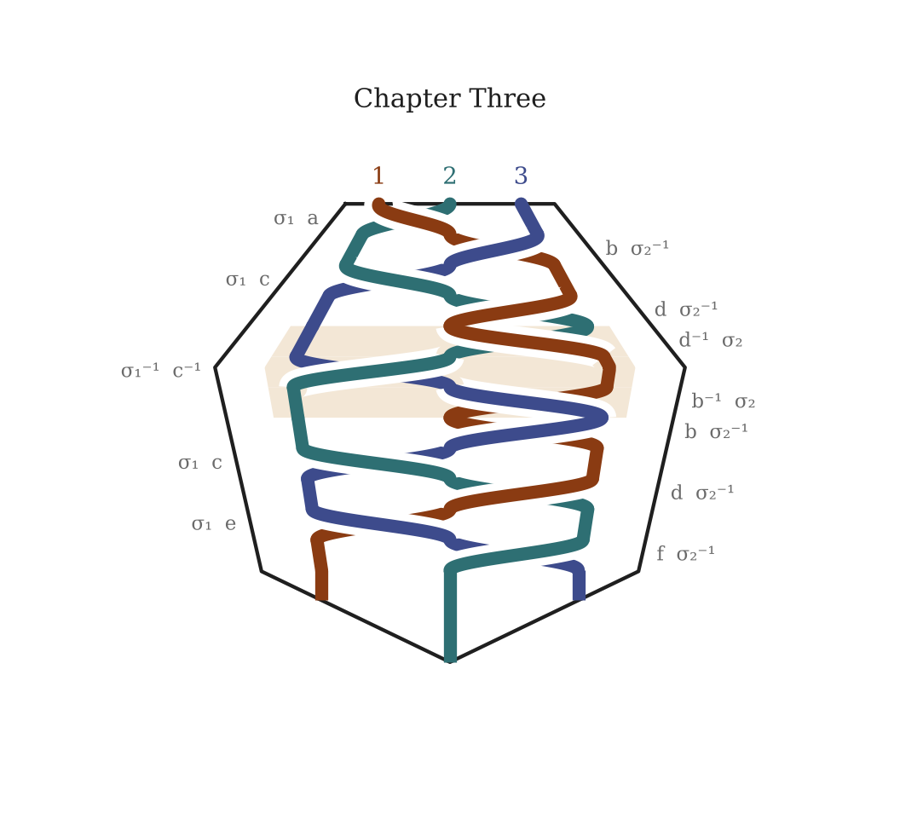
a2 1 3
Episode Two: The Empty Chair
The Thread and the Threshold
NEW HAVEN. BEINECKE PLAZA AND ENVIRONS / THE HILL. 7:14 PM.
Gyrl noticed first.
He didn't say anything. He didn't reach for Boi's arm or slow his pace or do any of the things that would have been natural and would have told the wrong person that he'd noticed. He just — shifted. A degree and a half to the left. Enough to change his angle of vision. Enough to put Boi slightly inside his peripheral range.
She picked it up from the shift.
Boi had spent her entire life learning to read the quality of male attention from thirty feet away — the difference between incidental and deliberate, between someone who happened to be going the same direction and someone who had decided to go the same direction. The man in the grey coat had decided. She clocked him in the moment her body registered Gyrl's micro-adjustment, which meant she'd been clocking him for thirty seconds before she knew she was clocking him. Threat assessment as proprioception. You learn it young.
She didn't look at Gyrl. They were walking side by side in the particular way of people who had not yet worked out the spatial grammar of being next to each other, and she was aware of exactly how much space she was giving him, and she kept her voice level and aimed straight ahead, as if she were talking to the street.
“Grey coat. Behind us.”
His answer came back the same way. Not a murmur — just a voice pitched for two feet, not four.
“I see him. There's a second one. Far side of the green.”
She didn't look. She didn't need to. She believed him absolutely. That told her something too.
“How long?”
“Since the library.”
Since the library. They'd been under observation for the entire Beinecke visit, which meant either the Beinecke had better security than a card and a cover story, or someone had been waiting for them to go in. Neither possibility was comforting.
She thought about splitting up. The math was obvious: two people were twice as hard to follow as one, each of them carrying nothing the other couldn't reconstruct. She ran the geometry in three seconds.
Meredith
i had hoped that we would include this discussion about the reorder. But, we can let it go for now. i want to open chapter three. Here in our conversation (which we should definitely include in the chapter -- and more generally, unless otherwise instructed, please include all of our exchange in the chapters) i want to revisit the Gurdjieff connection. In Mr G’s work the Enneagram takes a prominent position. Not the Enneagram of Personality, which is its own thing, but the Enneagram as a map of the Creative Process. There are nine positions in the Enneagram. Six positions and the lines connecting them represent what those of us who go through transformation have some kind of agency in. The other three positions and the lines that connect them have to do with the influence of the Mystery. They are arranged in a circle 0/9 - 1 - 2 - 3 - 4 - 5 - 6 - 7 - 8. And we can think of this as “clock time” or outer time. Meanwhile the lines describe inner time: 1 - 4 - 2 - 8 - 5 - 7 (describing the Law of Seven -- Heptaparaparshinokh) and 0/9 - 3 - 6 (describing the Law of Three - Triamazikamno). i think of the points as where qualities come into relation. If we think of 0 as the “kick” of the Creative Impulse setting us on our process of transformation, our quest, so to speak, then the 1 - 4 line is enumeration. From this heightened state -- having received a little bit of the Creative Energy -- we can see all the possibilities. For example, there are so many planets orbiting so many stars in so many solar systems in so many galaxies. But for the process to work within us and without us it has to get specific. Amongst all these planets, we choose one to be born on, and one star to orbit. The line 4 - 2 is about that selection. At the turning point, 4, we are still aware that even though we are orbiting Sol, we have not lost contact with all the other stars. Somehow Sol still has all the other stars, all the other possibilities inside her. Meanwhile our choice is both specific and a place where both Destiny and Fate can make their appearance. In some sense, the future is pulling the present towards it. The line 2 - 8 represents the influence of the higher aspects of the Creative Process on our choice. This is quite down to Earth. If the process is to prepare a meal for some friends, we might be walking the aisles of the supermarket imagining all the different meals we could make but eventually we have to pick the vegetables for the salad and pasta and sauce for the entree, etc. But, in those choices we can visualize the meal on the table and the faces of the people seated at the table. That vision of the meal, like a vision of a life on the third planet from Sol, is the future reaching back and influencing our choices. Now, we are near the top of the circle. But down at the bottom, the nadir, is the gap from 4 to 5. This is a very difficult place to navigate. It’s too far to go back, and too far to go forward. In my experience, the only way to cross this place is to recognize we cannot do this on our own. We are genuinely not enough. We have to ask for Help. The line 8 - 5 is invocation. 8 is the turning point between influence and invocation. The higher aspects of the process can hear sincere calls for Help. And in this moment of sincere humility comes the fruition of the process. The fig tree is not barren and not condemned to be withered. The line 5 - 7 is fruition and 5 represents the turning point where humility born can bear fruit. Inside that fruit is the seed of real renewal. 7 is the turning point and the 7 - 1 carries the process to a deeper place to begin again. What we haven’t described are the lines 0/9 - 3 and 3 - 6 and 6 - 0/9. The first line is Holy Affirming. It leads from the Creative Impulse to the First Shock. This is the pebble in the road that causes your bike tire wheel to wobble and makes you bring your attention back from what a fine day it is and how clever and wise you were to choose to ride your bike on this fine day back to being present to actually riding your bike. Meanwhile the line 3 - 6 is Holy Denying it takes us from the First Shock to the Second Shock. At this junction the only option is release. No more edits to the story, no more rehearsals. The thing must be released and received by the Mystery. And, of course, the line 6 - 9 is Holy Reconciling. The Mystery and Creature who would be transformed have somehow recognized and realized each other in each other. i go to this length to describe this not only for our readers, but also to say that Victoria understands this when she does tarot readings using the Enneagram and only the Major Arcana. Yet she does it lightly, never seriously, and yet her keen mathematical mind opens through this process to let something of the other side in. At least that’s how Balthazar explains it to himself. Because otherwise, she is inherently skeptical of all things woowoo.
Episode Two: The Empty Chair
The Bar at The Study
NEW HAVEN. THE STUDY HOTEL BAR. 5:38 PM.
The bar at The Study had the quality of a room that had thought carefully about what it wanted to be and had arrived at a considered answer.
Not the anonymous comfort of hotel bars designed for people who are somewhere other than where they want to be. Something better — warm wood, low light, a wine list that had opinions, and the particular acoustics of a space where two people could talk without being heard by the table next to them. Victoria had found it within ninety seconds of checking in. That was how long it took her to assess any room she was going to need.
Balthazar ordered Scotch. She ordered a Negroni, her drink for when she needed her mind to do something other than what it was doing. Balthazar knew this. He said nothing about it.
They had been over it twice already. The annotation. The Slovenian clause. The glyph and its impossible consistency. The empty chair at the seventh session, in no public record, because the seventh session was in no public record. Maas, who was dead and had nevertheless managed to leave a message in a manuscript sealed at Yale in 1969.
The Negroni arrived. Victoria looked at it for a moment before drinking.
“The clause is not about the pipeline,”
she said.
“No,”
Balthazar agreed.
“Maas said look at who is not at the table.”
“Yes.”
“We don't know who was not at the table.”
“We don't know what the table was.”
She drank. He was right. That was the problem. They had the annotation and the glyph and the routing anomaly and the fact that Maas had known about the third invariant — had known about it specifically enough to reference it in a message he had apparently arranged to leave in a seventh-century manuscript, which raised questions about the mechanism that Victoria had been setting aside because they were not the most pressing questions — and what they did not have was any of the structural context that would make these things mean something actionable.
When a problem would not yield, Balthazar worked the perimeter. He was doing it now. He reviewed what they knew about Maas. Doctoral work in mathematical physics, Göttingen. Recruited before he could finish. Cover as trade attaché, German mission to Monaco, a position that did not exist. Briefed on Victoria's work by someone — briefed specifically, not generally, which meant whoever briefed him had access to work she had never published under her own name.
“Someone told him about SweetVenom,”
Balthazar said.
Victoria put her glass down.
“That's a short list.”
“Very short.”
She looked at the bar. The warm wood. The considered wine list. The other people in the room, none of whom were paying attention to them. Either that was normal or it was professional, and she had no way to tell.
“The seventh session was closed,”
she said. “Which means the records don't exist, or they exist somewhere they aren't supposed to be accessed, or they exist and someone has made sure they can't be found by the methods that would normally find them.”
“Or all three.”
“Or all three.” She turned her glass. “The clause isn't about the pipeline. It's about who owns the mathematical framework for calculating something. Energy transit rights, probably, given the Adriatic context. But the mathematics is the point. Not the infrastructure.””
Balthazar was quiet for a moment. “The third invariant changes the topology.”
“That's what I told the operative in the alley.”
“Was that wise?”
“Almost certainly not,”
Victoria said. She had said the same at the time.
She finished the Negroni. Looked at the empty glass. Looked at Balthazar, who was watching her. The next thing she said would be either nothing or important, and he knew which faces meant which.
It was the particular look she got when her mind needed to do something else entirely. He had learned to recognize it years ago — the moment just before she stopped trying to think through a problem and started doing something that was not thinking: the only method that worked once thinking had gone as far as it could.
“The deck,”
he said.
“The deck,”
she agreed. She stood. “I need to draw the layout first. And I want another drink sent up.” She looked at him. “Do you want to be there for it?”
He had always been there for it. He had never told her what he thought of the readings, not directly, because what he thought of the readings was complicated and would have required a conversation about the nature of her mind and the nature of mathematical intuition and the question of whether there was a difference between genuine divination and a sufficiently complex pattern-recognition system operating on information the conscious mind couldn't yet articulate. He had decided, years ago, that this conversation would not improve anything.
“I'll be there,”
he said.
b2 3 1
The third figure.
That's what broke the geometry. Gyrl saw him first — a man emerging from a cross-street half a block ahead, the angle wrong for coincidence, the pace calibrated to arrive at their intersection in precisely the time it would take to cut off the split. Not running. Not hurrying. Just — placed. The way a chess piece is placed. Someone had done the same math she'd done and done it first.
She felt it in her chest before she thought it.
They're herding us.
Not containing. Not observing. The geometry wasn't surrounding — it was funneling. Grey coat behind, second figure on the green, third cutting off the diagonal. If she and Gyrl split now, each of them went alone into a channel someone else had built.
She didn't decide. She was already running.
Gyrl was half a step behind her and then beside her, the gig bag across his back, the headless neck of the Aristides bouncing above his shoulder. He ran well for someone who had spent years moving carefully in crowds; he had never lost the knack of fast when fast was needed. She matched his pace without thinking about it. Their strides synced inside four steps — not because either of them was adjusting, but because the same instinct was driving both.
Up ahead: a covered arcade, the entrance marked by a stone arch set slightly back from Chapel Street. Six shops minimum, maybe eight. The arch was wide enough to read as multiple options for long enough that pursuers coming from the street wouldn't be able to clock which door they'd taken.
She cut left. He was already cutting left.
The Wheel Speaks
NEW HAVEN. ROOM 14, THE STUDY HOTEL. 6:47 PM.
The deck lived in a black lacquer box that had belonged to Victoria's grandmother, who had not been the kind of woman you asked too many questions about.
The cards themselves were older than the box — a Marseille deck, mid-nineteenth century, the pigments slightly faded in the way of things that had been handled by many different hands over a long time. The Major Arcana only. Victoria had removed the Minor Arcana the year she began using the Enneagram as a layout, because the Minor Arcana complicated the structure in ways she found unproductive. This was, she would tell you if you asked, a purely formal decision.
Balthazar had stopped asking.
The room the Study had given them was warm and particular, the way good hotels are: not the anonymous comfort of chains, but a place someone had thought about. Two windows, good light even now as the November afternoon collapsed into evening outside. A writing desk. A chair positioned near the window that was clearly the chair. Victoria was at the small table by the radiator. It hissed quietly to itself, as old radiators in New England do; they have opinions.
The nine positions were already laid out before her — an Enneagram drawn in pencil on a piece of hotel stationery, the nine stations marked and numbered, the lines connecting them drawn lightly so as not to interfere with the cards. She did this before every reading. The drawing itself was part of the process.
She shuffled with the easy automaticity of long practice and began to pull.
Balthazar was in motion.
Not restlessly — “purposefully” was too strong a word, but there was intention in it, the quality of a man who thinks better when his body has something to do. He had his jacket off. He was moving between the window and the bed and the writing desk and back, a circuit that had established itself naturally within the first ten minutes of their return to the room, the way circuits do when a mind has something it needs to work through.
He paused behind Victoria as she placed the first card.
Station one: where renewal and enumeration come together. The position where the process returns from its last completion and sees the full field again — all the stars, all the possibilities, the whole landscape of what could be chosen. She turned the card face up without ceremony.
The Magician.
“Hmm,”
Balthazar said.
“Don't hmm at the first card.”
“I'm not hmm-ing at the card. I'm hmm-ing at the position.” He studied it over her shoulder. The Magician: the figure at the table with all four suits before him, one hand raised, one hand lowered, as above so below, the lemniscate floating above his head like a thought he'd always had. “All the tools present. Everything available. That's —”
“Extremely on the nose, yes. Keep moving.”
He kept moving.
Station four: where enumeration meets selection. The turning point of the outer circle. Here the full starfield begins to resolve into a particular orbit — not losing contact with all the other stars, but one sun beginning to exert its specific gravity. She pulled the card. Turned it.
The High Priestess.
She looked at it for a moment longer than the first.
The High Priestess sat between two pillars — B and J, Boaz and Jachin, the pillars of the Temple — with a veil behind her that concealed and revealed simultaneously. The scroll in her lap half-hidden. The crescent moon at her feet. She was knowing something, which is a different activity from doing anything.
“Four,” Balthazar said, coming back around. He had developed a sixth sense for when a card warranted attention. “Enumeration meets selection. The place where all the stars are still present but one orbit is beginning to assert itself.” He looked at the Priestess for a moment. “She's not helping you choose. She's waiting to see what you choose.”
“I know what she's doing.”
“I'm just —”
“I know. Keep moving.”
Station two: where selection meets influence. The position where the higher aspects of the Creative Process reach back through time to shape the choice being made — the vision of the completed meal informing which vegetables get put in the basket. The future pulling the present toward it. She pulled the card.
The Star.
She exhaled, very slightly.
The Star: a figure kneeling at the water's edge, pouring from two vessels, one into the water and one onto the earth, the eight-pointed star above and seven smaller stars attending. The card of hope, yes, but more precisely the card of navigation — of finding one's bearing by light that left its source long before the journey began. The future, present in the present as a fixed point in the sky.
“That's —” Balthazar had stopped moving. “That's actually quite beautiful for that position.”
“It's too beautiful for that position.”
“Why?”
“Because when the reading is going well in the early stations, something goes wrong at five.” She said it without drama, like a forecast. “The beautiful cards in the early positions are the setup.”
He said nothing. He resumed his circuit.
Claude
This is extraordinarily rich, and it connects to the story at multiple levels simultaneously.
The Enneagram as the story’s hidden skeleton. What you’ve described isn’t just background for Victoria’s tarot practice — it’s a map of the entire arc we’ve been building. The Creative Impulse at 0/9 is the Voynich manuscript itself, or perhaps whatever force set V&B in motion centuries ago. The 1-4 enumeration is exactly what Boi and Gyrl are doing — they can see all the possibilities, the whole starfield of the routing anomaly and the forum threads and the Slovenian clause, and they’re still at the stage of seeing everything. The 4-2 selection, where Sol contains all the other stars — that’s the moment they choose New Haven, choose the Beinecke, choose each other. And the gap at 4-5, the nadir, the place you cannot cross alone — that’s the chapter we haven’t written yet.
Victoria’s tarot practice as the opening she doesn’t admit to. The detail that she does it lightly, never seriously is exactly right. She can use the Enneagram as a structure for the Major Arcana without admitting she believes in it, because the Enneagram is real mathematics. She’s doing applied topology, she tells herself. The fact that it works, the fact that Balthazar watches it work and has to explain it to himself, the fact that she keeps doing it — all of that stays below the threshold of what she’s willing to examine.
The connection to the series arc. If V&B’s awakening to their fae nature is what makes B&G’s transformation possible, and if the Enneagram describes the creative process of transformation, then the story itself is an Enneagram. The 4-5 gap, the nadir, the place you cannot cross alone — that’s where they’ll all meet. That’s where the Help has to be asked for. And the Help, in this story, is each other.
c3 2 1
She placed cards at stations six, seven, and eight without pausing to read them — building the full structure first, letting the pattern wait. This was the discipline the Enneagram required: the individual cards were not the reading. The reading was the shape they made together.
Station six: where Holy Denying meets Holy Reconciling. The Second Shock, the place of release. No more rehearsals. The thing surrendered to the Mystery.
Station seven: where fruition meets renewal. The completion that carries the seed of the next beginning.
Station eight: where influence meets invocation. The turning point where the higher aspects of the process can hear a sincere call for help.
Then station three.
The meeting of Holy Affirming and Holy Denying. Yes encountering No. The First Shock. The pebble in the road.
She pulled the card.
Turned it.
Looked at it.
The Tower.
Balthazar was at the window when her hands stopped. He had learned, over years of watching her work, what it meant when her hands stopped: somewhere in her a clock had stopped counting, and a proof was doing itself. Not alarm, not yet. The moment before alarm, while she decided whether what she was seeing was real.
He came to look.
The Tower: a tall stone structure struck by lightning, the crown blown off, two figures falling from the height, flames at the windows. The card of sudden rupture. Of the structure that was built on a false foundation and has been waiting, without knowing it, for the lightning to find it.
But that wasn't quite it. Not at this station.
At station three, The Tower wasn't predicting collapse. It was describing the nature of the resistance. Holy Affirming had met Holy Denying, and the Denying force was no pebble, no small No that wobbles the wheel and brings attention back to the road. It was a No that had been present in the structure of things for a very long time, patient and architectural, waiting for the Yes to arrive that was large enough to be worth opposing.
They had been playing, she understood, in the forecourt.
“Three,”
Balthazar said quietly. “The First Shock.”
“Yes.”
“The pebble in the road.”
“Except,” she said, “the pebble in the road is supposed to wobble you.” She looked at The Tower. “This isn't a pebble.”
Balthazar pulled the chair from the writing desk and sat down beside her. His circuit had found its end point.
“Show me the rest.”
The arcade smelled of old stone and roasting coffee and something underneath both of those — resin, incense, the particular sweetness of dried herbs in quantities that suggested intention rather than decoration.
Eight shops. She counted them in the three seconds it took to slow from a run to a walk that wouldn't announce itself to the street behind them. Antique prints. A violin repair workshop, closed. A cheese shop, warm light, two customers. A jeweler's. A tea merchant with jars on shelves going up to the ceiling. And at the far end, set slightly deeper than the others, a shop whose sign was hand-lettered and had not needed to advertise in decades.
THE CONCORDANCE. Est. 1987.
Below it, smaller: Books. Instruments. Maps of Other Countries.
She looked at Gyrl. He was already looking at the sign.
“Maps of other countries,”
he said.
“Yeah.”
They went in.
Meredith
You are very astute. i didn’t say that the Enneagram is a map of the story, but that is exactly what i intended. Let’s use it as a literal map. There are 9 chapters, one for each station on the Enneagram. We begin Chapter 3 with Victoria doing a reading almost as a form of relaxation. But the cards that come up and how she pieces together what they might mean deliver a shock. Not an overwhelming shock, but the kind of shock that foreshadows the shock that is going to cause V & B to up their game. i see Balthazar moving around the room. Not exactly restless, but definitely in motion. Occasionally stopping behind Victoria to peer at the cards she has pulled and laid down. Often commenting on his sense of the meaning of the card in terms of the station it occupies. In a subsequent B & G scene, let’s have them enter a tarot card shop in New Haven. We’ll have to make up a reason they go in, maybe to avoid someone? But, let’s just write the V & B scene for now. Then format it, with this dialogue in the same format as chapters one and two.
d3 1 2
She turned the remaining cards face up in sequence.
Six: The Hierophant, inverted. In its upright position: tradition, institution, the accumulated wisdom of structures that have endured. Inverted, at this station: the release that is being prevented. The surrender that is being held hostage. Something ancient that has the form of guidance and is using that form to obstruct the very thing guidance exists to serve.
Seven: The Chariot. Fruition meeting renewal — the momentum of completion carrying into a new beginning. The Chariot's driver holds two opposing forces in tension without forcing them to agree, forward motion achieved not through domination but through balance. There was something almost hopeful in this card, at this station. Whatever completed would have genuine momentum.
Eight: The Hermit. Influence meeting invocation. A figure alone with a lamp on a high place, neither broadcasting nor hiding — simply present with light, available to whoever is genuinely looking. The higher aspects of the process could be called upon. The lamp was lit. Whether the call would be made, and whether it would be sincere enough to be heard, was not the Hermit's question to answer.
And at station five, the nadir — where invocation meets fruition, the gap that cannot be crossed alone, the place of necessary humility:
The Moon.
The Moon: the card of threshold, of the path between two towers — and the towers here rhymed, Victoria noted, with The Tower at three. Of the creatures crawling from the water toward a light that might or might not be what it appeared to be. Of the place where ordinary perception fails not because the world has become unreal but because the real has become larger than perception can hold. The next step, here, required something other than what you came with. This was not a failure. This was the architecture of the crossing.
And at station nine — the crown of the circle, the meeting of Holy Reconciling and Holy Affirming, the completion that is also the new Creative Impulse:
The World.
Victoria looked at The World until the minutes stopped counting themselves. The dancing figure at the center of the laurel wreath, the four fixed signs at the corners — the bull, the lion, the eagle, the angel — which are also the four evangelists, which are also the four elements, which are also the four Living Creatures of Ezekiel's vision. Everything that has been separated, gathered. Every force that has been in opposition, reconciled. The card of completion that is not an ending but a recognition: the process has arrived where it was always going, and where it was always going turns out to have been here, and the arriving changes what “her” means.
“The World at nine,” Balthazar said. He said it quietly. That was how he said things when he was being careful.
“Yes.”
“That's not a warning.”
“No,” Victoria said. “It's not a warning.” She looked at The Tower. Then at The Moon at the nadir. Then at The World at the crown. The three points of the Law of Three, she realized — three, six, nine — were The Tower, The Hierophant inverted, and The World. Holy Affirming meets Holy Denying. Holy Denying meets Holy Reconciling. Holy Reconciling meets Holy Affirming. The Law of Three, complete and explicit, running through the reading like a spine.
She had not seen it until this moment.
“It's a description,” she said, more slowly. “The process completes. Something gets there.” She paused. “I'm not certain it's us.”
The radiator hissed. Outside the windows, New Haven had finished darkening into evening, the particular early dark of November, the streetlights finding their purpose.
“The Star at two,” Balthazar said, looking at the layout as a whole. “The future reaching back to influence the choice.” He traced the inner line without touching the cards: one to four to two, the Law of Seven beginning its course. “And at six —”
“The Hierophant inverted.” She had been looking at it since she turned it. “Something ancient that should be protecting and is instead controlling. Using the form of guidance to prevent the thing guidance is for.”
Balthazar was quiet for a moment.
“The 10X Collective,”
he said. Not a question.
“Possibly.” Victoria began to gather the cards with the care she always used — face down, in order, returned to the deck with deliberateness. “Or whoever killed Maas. Or the empty chair at the seventh session.” She paused with The Tower in her hand for just a moment before placing it with the others. “The Hierophant inverted doesn't tell you who. It tells you the shape of the obstacle.”
“And the shape is —”
“Old. Kind, by its own lights. In the way.” She placed the last card and closed the deck in the black lacquer box. “Which narrows the field somewhat but not usefully.”
Balthazar stood. Resumed his circuit, slower now, with less to resolve. “You said you weren't certain it was us at nine.”
“I said I wasn't certain.”
“But The World completes. The process arrives.”
“Yes.”
“So something arrives.”
Victoria looked at the closed box for a moment. Her grandmother's lacquer, worn at the corners from years of handling. The woman who had given it to her had never explained where she got the deck, or why she kept only the Major Arcana, or what she had done with the rest. Victoria had understood, at some level she had not examined, that these were questions without answers because the answers were not hers to give.
“Something arrives,” she agreed. “That's the promise in the structure.” She looked up at him. “It's also the oldest con in the oldest tradition. The promise that the process completes is real. What the process completes —” she paused — “into — is the part the structure doesn't specify.”
Balthazar considered this. Stopped at the window. Looked out at New Haven finding its evening.
“The third invariant,”
he said.
“Yes. Tomorrow.”
Outside, somewhere below the window, two people were walking in the direction of the Beinecke, their figures small against the darkened street, their pace unhurried. Victoria didn't see them. She was looking at the lacquer box.
If she had looked up, she might have recognized the way they moved: on purpose, without hurrying, as if they had been coming this way for longer than an afternoon.
She didn't look up.
Claude
Nine chapters, nine stations — that’s a beautiful formal constraint that will organize everything without ever needing to be announced. The reader who knows will see it; the reader who doesn’t will feel the shape.
Chapter Three occupies station 4-2: the turning point where the orbit is chosen, where Destiny and Fate make their appearance, where the future begins pulling the present toward it. Victoria’s tarot reading is precisely right for this station: she’s at the turning point, still aware of all the other possibilities, and the cards are the future reaching back.
The card that delivers the shock should speak to the 4-2 quality — choice that cannot be unchosen. Let Victoria pull the cards and we’ll see what they tell her.
The inside of The Concordance was the size of a large living room and had somehow been made to contain the contents of a much larger space. Shelves floor to ceiling. A rolling library ladder on brass rails. Glass cases along the side walls holding instruments of various kinds — some recognizable, some not. The particular smell of old paper and the other smell, stronger here, of things that had been brought together from many different sources over a long time and had achieved a kind of olfactory consensus.
Behind the counter at the back, a woman of indeterminate age was reading. She did not look up when they entered. She turned a page. She said, without looking up:
“The door locks from the inside. Second bolt, above the knob. The back room has a second exit to the lane.”
Boi looked at Gyrl.
The woman turned another page.
“You're not the first people who've needed both of those features. I generally find it's easier to mention them upfront.”
She looked up. Her eyes were the particular grey of people who have spent a long time paying attention to things most people don't notice. She looked at Boi for a moment. Then at Gyrl. Then at the gig bag on his back with the headless neck of the Aristides above his shoulder. Her expression shifted into something that was not surprise but was its close cousin.
“Oh,”
she said. She said it quietly, as though to herself. Then, to both of them: “Sit down. I'll make tea. The gentlemen outside will lose interest in approximately seven minutes — they're on a schedule that doesn't include extended surveillance. But you should stay until they're gone.”
She closed her book. Set it on the counter. Rose.
The title on the spine, as she moved away, was visible for a moment: — the spine was blank. Not worn or damaged. Blank. As though the title existed in a language the cover had decided not to use.
“How do you know what they're on?”
Boi said it. It came out steadier than she expected.
The woman filled a kettle without turning around.
“Because I trained the ones who trained them. A long time ago. And the schedule hasn't changed.”
d⁻¹ · unweaving3 2 1
The Hill was very still.
Quieter than usual: the first sign that something had arrived uninvited. The richness was the same, the world more vivid, the center of the chest expanded and full, but underneath it now there was a pressure the quiet was working to hold, like water at its calmest in the moment before something breaks it from below.
Clotho had not spoken in forty-one hours. In the economy of The Hill, where speech was not required and silence was not absence, this was not unusual. In the context of the last three days, it was the most alarming thing she could have done.
Now the operative was on The Hill, and the operative had not been there before, and the introduction of a new presence into The Hill after forty years of closed membership was —
Atropos began.
“Your name within the Collective.”
The operative gave it. One word. The Hill received it without comment.
“You were at the Beinecke.”
Lachesis, without inflection. Not a question. A measurement.
“Yes.”
“You made contact with two individuals leaving the library.”
“I followed them. The contact was indirect.”
The tea was real.
Boi didn't know why this surprised her. She wrapped both hands around the cup and felt the warmth and thought: the last twenty minutes happened. The running and the arcade and this woman with her blank-spined book who had known they were coming in the way that people know things when they have been paying attention to the right things for a very long time.
The woman's name, offered without ceremony, was Reza.
She had arranged herself behind her counter again in the manner of someone who lived in the particular ecology of a small shop and had long since achieved equilibrium with it. She had not asked why they were being followed. She had not asked what they'd been doing at the Beinecke. She was waiting with the patience of someone who had learned that the right questions arrived in their own time, and that the interval before they arrived was not wasted.
Gyrl had his hands around his cup and was looking at the nearest glass case, which contained three instruments he didn't have words for and one he did — a small rebab, North African, the skin of the resonator worn thin from long playing. He was looking at it the way musicians look at instruments that have been used: not with desire, but with recognition.
“The gig bag,”
Reza said.
He looked up.
“The guitar in the gig bag. You were worried about it while you were running.”
It wasn't a question. He didn't answer it as one.
“It's not replaceable.”
“No,”
said Reza. “The things that aren't replaceable are the things worth running for.” She turned her cup in her hands. “You found something in the manuscript.”
Still not a question. Boi looked at Gyrl. He looked at her.
“We found a mark,”
Boi said. “In the margin. Folio 33. It wasn't in any of the scans.”
“No,”
said Reza. “It wouldn't be.” She looked at the blank-spined book on the counter for a moment, as though it had said something. “The marks that aren't in the scans are the marks that were added after the manuscript was sealed. The ones that were always meant to be found in person, by the right people, at the right time.” She looked up. “There are seven of them, in seven libraries. You found the one at Yale. The others require different libraries.”
The word ‘require' sat in the air between them with a particular weight. Not ‘are in'. Not ‘can be found at'. Require.
“How do you know this?”
Gyrl asked it. Quietly.
Reza looked at him with grey eyes that had been paying attention to the right things since before he was born.
“Because I put three of them there. Not here. Three of the seven, in three of the libraries,”
she said. “In 1987. The year I opened this shop.” She turned the cup once more and set it down. “Don’t take that as a promise of help. I can tell you where to look. I can’t come with you, and I can’t tell you why. When I left the people who trained the people following you, I gave my word not to use most of what I know. I’ve kept it for thirty-nine years. It costs me something every time I come close to breaking it, and this is close.” She stood. “The people who were following you — they'll be past the arcade by now. You can go out the way you came in or through the back. The back brings you out on Crown Street, two blocks from here, facing the other direction.” She paused. “I'd suggest the back. Not because the front isn't safe — it is. But because what you're doing now has a direction, and Crown Street is part of it.”
Boi looked at the blank-spined book. At the glass cases. At Reza, who had trained the people who trained the people who had just been following them, and who had been putting marks in manuscripts in 1987, and who had made them tea.
“Why did you help us?”
Reza picked up her book.
“Because someone has to be at the threshold when the right people arrive. That's what the shop is for.” She opened to her page. “And because the guitar isn't replaceable, and the girl with the drumsticks has been carrying something she doesn't have words for yet, and those two facts together mean something I've been waiting to see for a long time.””
She began to read. The kettle had gone quiet. Outside, through the stone arch and the width of Chapel Street and the cold November evening, New Haven was going about its business in the way of cities that contain more than they display.
Meredith
This is definitely a step in the right direction. Let me spell out the stations in order: 1 is where renewal and enumeration come together; 2 is where selection and influence come together; 3 is where Holy Affirming and Holy Denying come together; 4 is where enumeration and selection come together; 5 is where invocation and fruition come together; 6 is where Holy Denying and Holy reconciling come together; 7 is where fruition and renewal come together; 8 is where influence and invocation come together; 0/9 is where Holy Reconciling and Holy Affirming come together. Chapter three is the station of the First Shock, where Yes first encounters No. V & B, for whom the world is usually their oyster, get their taste of a challenge that causes them to up their game. Can we write a new version of the scene keeping most of the elements, but also including all of our dialogue to this point?
c⁻¹ · unweaving2 3 1
Episode Two: The Empty Chair
The Empty Chair
NEW HAVEN. THE STUDY HOTEL, ROOM 12. 9:47 PM.
The argument about the room had lasted four minutes and had not been about the room.
It had started on Crown Street, coming out of the back of the arcade into the cold, the lane smelling of old stone and exhaust. Boi had said: my hotel has a work table and a door that locks and we can order food. Gyrl had said: I have a place. She had said: where. He had not answered immediately. That was an answer. She had said: I'm at The Study, which is two blocks from here, and we need to talk through what just happened somewhere that isn't a sidewalk in November.
He had said: I don't need you to cover a room.
She had said: I'm not covering a room, I already have a room, I'm suggesting you use the chair in it.
He had looked at her for a moment, deciding whether the argument was worth the energy. Then he had shifted the gig bag on his back, the Aristides shifting with it, and said: fine. The chair.
The room was on the second floor, facing south. It had a window that looked out over the street below, the lights of New Haven doing what city lights do in November, which is make the dark look inhabited. It had a writing desk and two chairs and a bed, and like all good hotel rooms it had been thought about.
Gyrl stood in the middle of it for a moment before sitting. He was doing the thing Boi had already noticed he did in unfamiliar spaces — a brief, nearly invisible inventory. Not threat assessment. Something more like tuning. Getting the room's frequency before settling into it.
She ordered food without asking what he wanted, because she had been paying attention on the train and in the coffee shop and she had a reasonable working hypothesis. She was right about most of it.
“What did they say.”
Clotho. The first words in forty-one hours, and they were these. Not ‘were you seen' or ‘what did you find' or any of the procedural questions Lachesis and Atropos had been working toward with the careful patience of people who had done this before. Clotho went directly to the center of it. Her voice on The Hill was that of someone who had held a question for forty years and decided the holding no longer served.
“They spoke to you.”
“One of them did. The woman.”
“What did she say.”
The operative paused. On The Hill, pauses were not evasions — they were measurements. This pause was the length of someone trying to reproduce something accurately.
“She said: the Slovenian clause is the beginning of the question, not the answer. The third invariant changes the topology.”
The Hill held its breath.
Three old minds, which had all the room in the world, found the room suddenly full.
“She said that.”
Lachesis. Also not a question.
“Word for word.”
Atropos had not moved. Her stillness was the oldest kind — not absence of motion but the perfect conservation of it, energy held rather than spent. She was looking at the operative as at a message she had been waiting forty years to receive.
“Did she know what it meant.”
“She seemed to.”
“Did she say.”
“No. She extended her hand. The other one — the man — asked if it was wise. She said almost certainly not.”
Clotho made a sound that was nearly a laugh. On The Hill it landed like a chord resolving.
Claude
The stations as meeting points changes everything about how the cards should land.
Station 3 is where Holy Affirming meets Holy Denying — Yes encountering No for the first time. The Tower is exactly right here. Not because it predicts catastrophe but because it is the meeting of the affirming impulse with the first real resistance. The Tower doesn’t mean destruction — it means the Creative Impulse has encountered something with enough substance to push back. V&B, for whom the world is usually their oyster, are meeting a No that has genuine weight.
Station 4 is where enumeration meets selection — all the stars, and the moment of choosing the orbit. The High Priestess is perfect: she holds all possibilities without collapsing them, waiting to see what gets chosen.
Station 5 is where invocation meets fruition — the nadir, but also the turning point. The Moon is right: you can’t see clearly here, but the calling out and the answering are happening in the same moment.
Station 8 is where influence meets invocation — the Hermit with his lamp is exactly that. The higher aspects of the process are present, but they require the sincere call. The lamp doesn’t broadcast; it’s available to whoever is genuinely looking.
Station 9/0 is where Holy Reconciling meets Holy Affirming — The World is the completion that is also a new beginning. The process doesn’t end; it deepens and starts again.
This clarifies what the reading is telling Victoria that delivers the shock. It’s not just the Tower appearing — it’s the Tower at the station where Yes meets No, combined with The World at the crown, combined with The Moon at the nadir. The reading is saying: the resistance you will encounter is real and structural, the crossing of the nadir will require genuine invocation, and the process completes — but into what, and for whom, the cards will not say.
For V&B specifically: their particular flavor of No will target the very thing that makes them exceptional. They move through the world with wit and grace and the accumulated competence of people who have never been genuinely stopped. The First Shock in Chapter Three is the moment they discover that the game they’re playing has a level they haven’t encountered before. Not the operatives in the alley — that was handled with ease. Something more fundamental.
b⁻¹ · unweaving2 1 3
They laid it out on the desk.
Not literally — there was nothing physical to lay out, no photographs or documents or string on a board. But they each opened their laptops and their notes and began to speak, and what emerged was the shape of what they knew. It was more than either had realized, until there was someone to say it to who could say it back.
The glyph. Folio 66r of the Voynich manuscript, margin, upper right. A mark in ink that the 1978 Hämäläinen monograph had identified as a possible later addition, circa 1890–1910. Darker and more confident in person than in any scan. And the same glyph — or a glyph in the same vocabulary, like words in a related language — in a Slovenian document that the routing anomaly had led Boi to eight months ago. A clause broker's file. The document itself unavailable. The clause referenced but not reproduced.
The routing anomaly. The V&B stories routing through Beinecke archive nodes before dispersal — 2003, 2007, 2011, 2015, 2019, 2023. The four-year cycle that was not a leap-year cycle. Boi had mapped it. Gyrl had confirmed it from a different angle, tracking the mathematical content.
The annotation. Folio 66r, upper margin, in fresh ink. In English. Written after Maas's death. Addressed to someone. Referencing the Slovenian clause, the pipeline, the empty chair, and something called the third invariant.
Reza. Who had put three of the seven marks into three of the seven libraries in 1987. Who had trained the people who trained the people following them. Who had known they were coming.
Gyrl had his notebook open — actual paper, handwritten, the pages dense with the shorthand of a man who had taught himself to think on paper. He turned to a page and tapped it.
“The clause. The annotation says: look at who is not at the table. Which means there was a table. A negotiation. G20 energy, Adriatic routing, Slovenian document — that's a pipeline agreement.”
“There's no public record of a seventh session,”
Boi said. “I looked. There are six sessions in the public record for the Adriatic gas framework. The seventh isn't there.”
“Because someone wasn't at it.”
“Or because what was decided there wasn't supposed to be public.”
He turned another page. “Or both.”
The food arrived. They ate without stopping. Boi had been right about most of it.
Meredith
i've been thinking about a quickly paced back and forth cut. The cadence is like a few paragraphs in one world and then a few paragraphs in another. Thus, the B & G tarot shop scene is tightly interleaved with the Clotho scene. In the B & G scene they become aware of being followed when leaving the Beinecke. i imagine it is Gyrl who picks up on this first because of his sensitivities to his environment. But, Boi, who has had to deal with unwanted male attention all her life, quickly confirms Gyrl's noticing. They consider splitting up, but then something happens (what?) to make them run for it together. Then, out of desperation they duck into the Tarot shop. It would be better if it were a turn into a collection of shops so they have time to choose the Tarot shop before their pursuers see which one they ducked into. Obviously, it's not just a Tarot shop, but either an occult store or a magic store. i suspect they find an unexpected ally who helps them hide or escape. Meanwhile the Clotho scene is Clotho and the other Fates interrogating the operative to find out what happened. i imagine the Fates cutting the operative's answers off and questioning from three sides. So, the whole section goes back and forth between B & G and Clotho to achieve a very fast-paced tension.
“You let them go.”
Lachesis, neutral.
“I didn't have authorization to detain.”
“No,”
said Atropos. “You didn't.”
A silence. On The Hill, silences were not blank. This one contained, among other things: the question of whether the authorization should have existed, the question of who should have given it, and the much older question of whether the people who had been followed through New Haven this evening were the kind of thing that detention applied to.
“The third invariant,”
Clotho said. She said it as though she was reading something written in the air. “The topology changes.”
“You know what she meant,”
said Lachesis. Also not a question. Also a measurement.
“I knew what she meant forty years ago,”
said Clotho. “I have been not knowing it ever since.” She paused. “The Voynich glyph. Folio 66r. The ink that the conservator will spend four years explaining.” She looked at neither of the others and both of them simultaneously, in the way of The Hill. “The clause is not about the pipeline. It was never about the pipeline.”
“Maas,”
said Atropos.
“Maas,”
said Clotho. “Who nearly had a doctorate in mathematical physics from Göttingen. Who was briefed on Victoria's work by someone. Who died in Monaco and wrote a message in a manuscript that was sealed in Yale's collection in 1969.” She let that sit. “The membrane is thinner than we thought. It has been thinner for longer than we thought. The routing anomaly isn't new. It's been building since 2003 and we have been measuring it without understanding what we were measuring.”
The Hill held this.
The operative had been trained for interrogation. Nothing in the training covered this. She did not move.
“What do we do,”
said Lachesis, and for the first time in the conversation she was asking rather than measuring.
Atropos turned to the operative. She had held a thread for forty years, and she had just felt it pull.
“Nothing yet. We wait to see if she finds the third invariant. We wait to see what she does with it.” A pause that had the weight of four decades in it. “We have been so careful not to become the obstacle. The Hierophant inverted.” She said the last phrase flatly, as if quoting, though she could not have said whom. “Something ancient that should be protecting and is instead controlling.”
An hour earlier and a world away, in Room 14 of a hotel in New Haven, a red-haired woman with a deck of cards had said the same sentence, word for word, to a man pacing by the window. Neither speaker would ever know about the other. The Hill, which kept everything, kept both.
Clotho looked at her.
“You know about the reading.”
“I know about the reading,”
said Atropos. “I've always known about the reading. There have been seventeen versions of it across as many years and they always end the same way.” She was quiet. “The World at the crown. Something arrives. She's never been certain it's them.”
The Hill made room for this, as it made room for everything. Outside, somewhere on the surface of the world that was not The Hill, evening was finishing its work on New Haven, and in a shop at the back of a covered arcade, a kettle was beginning to sing.
b2 3 1
It was Gyrl who found the thread.
He had been working the mathematical angle — the third invariant, a phrase that meant something exact in topology, the study of properties that survive continuous deformation. An invariant is a quantity that doesn't change when you transform the underlying structure. A third invariant implied a sequence: first, second, third. A classification system. He had been looking at papers adjacent to the problem — knot theory, concurrency, mathematics obscure to everyone but the few who worked in it — when he found a comment thread on a preprint server. A paper about process calculi and topological invariants that someone had annotated extensively.
The annotations were signed with a handle he recognized.
He looked at them. Then:
“Do you know SweetVenom?”
Boi looked up from her screen.
The question landed hard. Not casually. With the weight of something that had been a separate thread and had just, without warning, become the same thread.
“I've been talking to SweetVenom for two years,”
she said.
Gyrl looked at her. “About what.”
“Cryptographic document provenance. Archive authentication. The kind of thing where you need someone who understands both the math and the forgery side.” She paused. “You?””
“Mathematical physics applications. Process calculi. Some topology.” He turned his laptop to show her the screen. “She annotated this paper eighteen months ago. Some of these notes are — they're not a grad student. This is someone who has been working these questions for years.””
Boi looked at the annotations. Her mouth tightened.
“She never told me she was a mathematician.”
“She never told me she was doing document authentication.”
They looked at each other across the desk with the food between them and their laptops open and the window behind them showing New Haven at night.
Two years. The same person. Different handles, different angles, different questions — and neither of them had known the other was there.
“Okay,”
Boi said, slowly. “Okay. We should ask her about the clause.”
“Separately.”
“Separately. And see what she says.”
VIII
NEW HAVEN. ROOM 14, THE STUDY HOTEL. 12:03 AM.
Victoria worked as SweetVenom the way some people pray — privately, with focused attention, in the register she was most fully herself.
The handle was twelve years old. It predated the V&B stories by three years, which meant it predated the version of herself that existed in the world's imagination. SweetVenom was not a secret from Balthazar — there were no secrets from Balthazar; that was built into their arrangement — but it was hers in a way that few things were hers. The mathematics was hers. The network was hers. The accumulated reputation of a person who had been right about difficult things in obscure places for long enough that other difficult people in obscure places had started paying attention.
Balthazar was asleep. He slept like a man who had made a professional study of rest — the ability to go down fast and come up clean, a skill developed over years of operating in conditions that didn't reliably offer beds. Victoria didn't sleep the same way. She slept in fragments, with long intervals of wakefulness in between, and had long since decided to treat the intervals as time rather than insomnia.
She had the tarot layout still visible in her mind. The Tower at three. The Moon at five. The World at nine. The Hierophant inverted at six. And under all of it, the third invariant, which she had known what it meant for three days and had not yet said aloud.
She opened the terminal.
Claude
This is a beautifully cinematic structure — the interleaving will create a kind of double pressure where each cut arrives just at the moment of maximum tension in the other thread, so the reader is never allowed to settle.
The open question first: what makes B&G run rather than simply split up? The split-up is the logical move and they both know it. A few options:
The follower is not alone. Gyrl clocks one, Boi clocks a second on a parallel street, and then a third cuts off the natural split point before they can execute. Suddenly the geometry of splitting doesn't work.
Something happens to one of them that makes the other unwilling to separate. The gig bag. Gyrl can't run freely with it, can't leave it, and Boi makes the decision for both of them without discussion. This is the most character-revealing option.
They see something that tells them splitting up is exactly what the pursuit wants. A professional tail doesn't just follow — it herds. They realize simultaneously that the geometry of where they're being steered is deliberate, and that splitting is the intended outcome, not the escape from it.
My instinct is a combination of the first and third: multiple pursuers whose positioning makes the herding visible, and then a sudden escalation — not violence, but the unmistakable signal that this is moving toward confrontation — that makes running the only remaining option.
For the Clotho interrogation: the three-sided questioning is wonderful formally. The operative, trained for human interrogation, finds the three-sided pressure disorienting in a way they can't quite name. And what they're trying to extract is not just what happened — it's what V&B said. The message about the third invariant and the topology. That message has reached the Fates and Clotho's breaking of her silence is the direct response to it.
One structural note on the interleaving: the cuts should land at moments of suspended action rather than completed action. We cut away from B&G just as they turn into the arcade, before we know which shop. We cut back to find them already inside. The reader's mind fills in the gap.
c3 2 1
There were two messages she hadn't seen yet. Different handles. Different platforms. Different angles.
She read the first one. A document authentication angle, the writer said. A clause in a G20 framework, Slovenian provenance, not about the pipeline. Can't find the parent document.
She read the second one. A mathematical physics angle. Third invariant. Diplomatic document. Pipeline implications.
She read both messages twice, and then a third time, slower.
Two people. Two angles. Arriving within seventeen minutes of each other.
She knew both handles. She had been corresponding with both of them, separately, for over a year. They were good — genuinely good, not just persistent. Good from intelligence and obsession together and the willingness to follow a thread past the point where most people stopped following. She had wondered, occasionally, who they were in the non-digital world. She had not wondered hard, because the non-digital world was not where this kind of work happened.
They didn't know about each other. That much was clear from the way both messages were written — each of them approaching the same question as though they were the only person asking it.
They were in New Haven. She was almost certain of it. The timestamp, the angle of the document question, something in the phrasing of the topology message that had the quality of someone working from a physical encounter rather than a digital one. Someone who had seen something today.
She drafted her replies with the care she always used for communications that mattered.
To the first handle: the message about what the clause was really about, and the instruction about the glyph.
To the second handle: the message about the invariant, its non-metaphorical status, and the instruction to use the other channel.
She sent them.
Then she sat for a moment, looking at the screen. She had just done something that could not be undone, and was deciding how she felt about it.
“Balthazar,”
she said.
From the bed, without opening his eyes: “I'm awake.”
“I know you are.”
“The invariant?”
“Not yet. Something adjacent.” She turned the laptop so he could see both message threads, if he chose to look. “I think there are two people in this hotel who have been working the same case we have. From the outside.””
A silence. He opened his eyes and looked at the ceiling.
“Not 10X.”
“No. Something else. Someone else.” She looked at the window. “Reza sent them.””
Another silence. He sat up.
“Reza has been quiet for years.”
“Reza is never quiet. Reza is patient. Those aren't the same thing.” She closed the laptop. “Tomorrow I tell you what the third invariant means. And then we go to Columbia.””
“Columbia.”
“Vera Kovács is giving the last lecture of a series on Thursday. She was at the Adriatic framework negotiations through the sixth session and then she wasn't.””
“The empty chair.”
“The empty chair,”
Victoria agreed.
She looked at the lacquer box on the writing desk. The penciled Enneagram on the hotel stationery, faintly visible in the light from the screen. The World at the crown. Something arrives. She had never been certain it was them.
She was less certain now than she had been this evening, and she found, somewhat to her surprise, that this felt like progress.
Boi's message to SweetVenom went out at 10:34 PM.
It said: I have a reference to a clause in what I believe is a G20 energy framework agreement, Slovenian provenance, possibly late 2010s. The clause concerns a pipeline but apparently isn't about the pipeline. I can't locate the parent document — I'm not even sure the parent document is public. Does this reference pattern mean anything to you? Asking because of a document authentication angle I've been working.
Gyrl's message to SweetVenom went out at 10:51 PM, from a different handle, on a different platform.
It said: following up on the topological invariants thread from last year. I've encountered a reference to a 'third invariant' in a non-mathematical context that seems to be using the term precisely, not metaphorically. The context involves a diplomatic document with pipeline implications. Is there work connecting process calculus invariants to geopolitical clause structures? This is an odd question but you're the only person I know who might have a useful answer.
They did not tell each other what they had written. They agreed to wait.
Gyrl opened his notebook to a new page. “The empty chair. Who withdraws from a G20 energy negotiation between the sixth and seventh session?”
“Someone whose position changed.”
“Or someone who was pressured out.”
“Or someone who found out what the clause actually was.”
He wrote it down. All three. Then: “Adriatic routing. That's Serbia, Croatia, Slovenia, Hungary, Austria. Maybe Bulgaria. Who had a senior energy position that would put them at that table and then didn't?”
Boi was already pulling threads. Her fingers moved fast. She had done this kind of search so long it had gone into her hands. Twenty minutes. Then:
“There's a name. Vera Kovács. Hungarian energy ministry, 2015–2019. She was in the Adriatic framework negotiations through the sixth session. She's not in the seventh session records — but there are no seventh session records. What there is is a gap in her ministry calendar in March 2019 where something was scheduled and then—”
“Removed.”
“Scrubbed. Like it was never there.” She looked up. “She left the ministry six months later. She's currently adjunct faculty at Columbia's School of International and Public Affairs. She's giving a three-lecture series on energy transition policy this week.””
Gyrl looked at his notebook. “Thursday.”
“Thursday is the last lecture.”
A silence. Not The Hill's silence. Two people had arrived at the same implication at the same moment and were waiting to see who would say it first.
“I have a session Thursday,”
Gyrl said.
“I know.”
“Reyes. It's not just the day rate —”
“I know what it is.”
She said it without sharpness. She meant: I understand. I'm not going to pretend it isn't real. He looked at her for a moment with the expression of someone who has been waiting for the offer he was going to refuse, and had not yet decided whether this was going to be that conversation.
“I'm not asking you to cancel it,”
she said. “I'm just noting that Thursday is the last lecture.”
“The lecture will be recorded. It's a university event.”
“Kovács won't say in the lecture what she'd say in person. She'll say what she can say on the record.”
He looked at his notebook. The three options for the empty chair: position changed, pressured out, found out what the clause was. He had circled the third one without meaning to.
“Let me think about it,”
he said.
“Okay.”
He looked at the time on his laptop. 11:47 PM. He looked at the chair and then at the floor space beside the desk and then at Boi, who was looking at her screen, waiting for a reply.
“You said the chair,”
he said.
“The chair,”
she agreed, without looking up. “Unless you want the floor. The carpet is —” she glanced at it — “reasonably good for a hotel.”
He almost smiled. Almost. He opened his laptop to a new document and began to write, and the room settled into two people working in parallel, which has its own silence, different from all other silences, and which neither of them remarked on because neither of them had words for it yet.
Meredith
Making progress! Thanks!
Claude
It's a pleasure — genuinely. This is one of those projects where the work keeps revealing more of itself the further in you go. The Enneagram as literal chapter map, Thomas and Anna on The Hill, Balthazar's circuit around the room, the grandmother's lacquer box — these details have a life to them that earns the complexity of the structure holding them.
When you're ready to continue, there's good material waiting: the B&G tarot shop scene, the third invariant revealed at last, Clotho breaking her silence, and the question of what Thomas decides to tell Alma next.
The nine-chapter map gives the whole thing a spine now. Each session we're building toward something that was always going to be there.
Meredith
Yes! Let's write that and include all of our dialogue (also the evening sign-off exchange from last night) and add that to the chapter three draft and then format it.
Claude
Let me check the transcript for the evening sign-off before we write, so I capture it accurately.
I have it. From the previous session, the closing exchange was:
Claude: Thank you — it really was a pleasure. What started as a creative brief turned into something genuinely layered: a mystery pilot with real mathematical and musical texture, a frame narrative with two characters whose identities are doing interesting things, a cosmology that earns its strangeness, and a redemption arc rooted in something as serious as Gurdjieff. Not bad for an evening. The document is in good shape whenever you want to continue. Episode Two has a lot waiting for it — Clotho breaking her silence, the conservator finding the fresh ink, the coffee shop scene, and whatever the empty chair at the seventh session actually means. Sleep well, Meredith.
Now writing the full new section — the chase and Clotho interleaved — and appending it to Chapter Three.
Claude
[From the previous session, included here for the record]
Thank you — it really was a pleasure. What started as a creative brief turned into something genuinely layered: a mystery pilot with real mathematical and musical texture, a frame narrative with two characters whose identities are doing interesting things, a cosmology that earns its strangeness, and a redemption arc rooted in something as serious as Gurdjieff. Not bad for an evening.
The document is in good shape whenever you want to continue. Episode Two has a lot waiting for it — Clotho breaking her silence, the conservator finding the fresh ink, the coffee shop scene, and whatever the empty chair at the seventh session actually means.
Sleep well, Meredith.
d3 1 2
X
THOMAS'S HOUSE. ALMA'S CAR. WEDNESDAY, 7:43 AM.
They were late.
Not significantly late — seven minutes, maybe eight — but the school had a narrow arrival window and Thomas had difficulty with narrow arrival windows, and late on a morning like this one had produced a situation that Alma was crossing like ice she was not sure would hold.
Getting Thomas into the car had taken twenty-three minutes. This was not a record, or by any measure a good morning.
The sequence had been: the wrong socks, which had to be found and replaced; the texture of the replacement socks, which was acceptable but required confirmation; the coat, which Thomas had refused on grounds he could not articulate and which Alma had eventually understood was about the way the collar sat rather than the coat itself; the breakfast, two bites of which had been eaten; and then the transition from the known space of the house to the unknown space of the car, which was not genuinely unknown — they drove this route five days a week — but which was, this morning, presenting as unknown in a way Alma couldn't identify and therefore couldn't address.
Thomas was in the back seat. His body was present but not organized: not distressed exactly, but not settled. His hands were moving. Not stimming, exactly: more as if his hands were looking for the right position and hadn't found it.
Alma had her hands on the wheel and had not started the engine. She was doing the calculation she did on mornings like this: whether moving forward would make things better or worse, whether the destination was the goal or whether the goal was simply getting Thomas through the next ten minutes, and whether those two things were the same thing today.
She turned around in the seat.
Thomas was looking at the headrest in front of him. He was not looking at her. She had learned, slowly and at some cost, that this was not absence. He was present, just not looking.
“Thomas.”
His hands continued their search.
“I know this morning was hard. I know we're late and that doesn't feel right.” She kept her voice level. The tone that wasn't bright, wasn't soothing, wasn't performing calm. Just: present. “Before we go. Can we breathe together?”
His hands slowed.
She had learned this from Sally, who had learned it from Thomas himself, in a session three months ago when he had pointed to the word ‘breathe' on his board and then pointed to her and then back to himself and Sally had understood that he was proposing a shared practice rather than requesting help with a personal one. The distinction mattered to him enormously. Alma had understood this distinction the first time Sally explained it and had spent a week being sorry about all the times she had offered breathing as something she could give him rather than something they could do together.
“In for four,”
Alma said. She breathed in. Counted. The car was very quiet. Outside, the neighborhood was doing its Wednesday morning thing — other cars, the sound of a garage door somewhere on the street, November air that smelled of dead leaves and the particular exhaust of a city that had not yet fully woken up.
“Out for six.”
She breathed out.
Thomas's hands had stopped.
She breathed in again. He was with her now — she could feel it, the quality of his attention shifting from inward to shared. Whatever the morning had been, it was becoming something more manageable.
She was three breaths in when she noticed his expression change.
Not distress. Something else. A look she had seen on his face exactly twice before, both times on The Hill: his face with nothing in the way of it, as if the whole of him had opened out and something larger was passing through. She had no language for it except that it was the opposite of dysregulation, a regulation that had nothing to do with her.
His eyes stopped tracking the road.
Meredith
So far we have been layering mystery upon mystery. We have to give the reader some kind of payoff. They have to feel like some things are falling into place, even if they don't have the whole picture. To this end i imagine the next scene, still chapter three, picks up with B & G again. This is in a hotel in New Haven. Perhaps even the same room that V & B are staying in. To establish that they currently live in different worlds -- even if the veil is thinning. There's an awkward point to negotiate. i like your idea that Gyrl is staying in a hostel, because that's within his means. But Boi comes from a family that has money. That's how she had the resources to design and construct her magic sticks. So, she is in the hotel. She has to shepherd them back to her room, overcoming Gyrl's fiercely defended independence, with the excuse that they can speak privately there. Eventually, she will have to suggest that it might be more comfortable for Gyrl to stay there, or perhaps the question is dodged because they work so late they fall asleep. While they are in the room they take stock of what they know already and try to piece together that with what they have learned since coming to New Haven. Perhaps during this session they go online and discover they both know SweetVenom. This will be first contact between B & G and V & B, even though they don't know it. Naturally, we have to write the companion scene where V gets online as SweetVenom.
SweetVenom's reply arrived at 12:09 AM.
To Boi's handle: I know this clause. I have been looking at it from a different angle for longer than you'd believe. The parent document doesn't have a public record because the seventh session was closed. The clause is not about pipeline infrastructure. It is about who owns the mathematical framework for calculating energy transit rights under post-scarcity conditions. This is a much larger question than a pipeline. Send me what you have on the glyph.
To Gyrl's handle, eleven minutes later: The third invariant is not metaphorical. In the context you're describing, it refers to the third of three topological invariants that characterize the solution space of a specific class of concurrency problems. The person who identified these invariants has never published them under her own name. The work exists in the technical documentation of a framework agreement that is not publicly available. If you have encountered a reference to the third invariant in a diplomatic context, you are closer to the center of something than I think you know. Do not contact me on this channel again. Use the other one.
Gyrl read his reply twice. Then he turned his laptop toward Boi without speaking.
She read it. Then turned her laptop toward him.
They read each other's replies.
They kept working after that, because neither of them could have slept. Somewhere around one-thirty the work stopped being work and became the two of them reading things out to each other off their screens, in the slightly hysterical register of people who have been awake too long and found someone who is awake in the same way.
Gyrl was halfway through a sentence about the seventh session — “If you know the next —” — when Boi said, without looking up, “— line, don’t say it. Let me.”
He stopped.
Then he laughed out loud.
Everybody who had read Age of Consent knew that line. It was something Victoria says at the concert, to no one the story ever shows, and the fans had been finishing each other’s sentences with it for years. It was a joke. It was the oldest joke in the fandom. Neither of them had ever had anyone to make it with.
“I can’t believe you just did that,” Gyrl said.
“You walked into it.”
“I walked into it,” he agreed, and was quiet for a moment, and then went back to the seventh session, still smiling a little.
At two she turned off the lamp on her side. He stayed on the floor by the desk, where the carpet was, as she had said, reasonably good for a hotel, with the laptop dimmed and the glow of it on the ceiling. She lay on her back on the bed and looked at the glow and said, to the ceiling, because she was too tired to be careful and it was the next line in her head:
“Hold on to me. Whatever I turn into, hold on.”
It was the other famous one. The Tam Lin line. The most romantic thing Victoria ever says.
He didn’t answer. She heard him stop typing. She lay there afterwards with her eyes open, wondering whether she had said something too large, until she fell asleep without finding out.
Outside the window, New Haven had gone quiet in the way of university cities after midnight — not empty, but gathered into itself. The streetlights held their ground. Somewhere on the same floor, behind a door neither of them had reason to know about, a black lacquer box sat on a writing desk with nine tarot cards returned to their deck and the penciled Enneagram still faintly visible on a sheet of hotel stationery.
The veil was very thin tonight.
Neither of them knew.
e1 3 2
Claude
This is exactly the right payoff move — the reader has been holding a lot of suspended threads and needs the satisfaction of watching two smart people lay them out and start connecting them.
The room itself does quiet thematic work if it's The Study — same hotel, possibly same floor, maybe even a room whose window looks out on the same street V&B looked out on in the tarot scene. We don't need to make this explicit. The reader who notices gets a chill.
The class negotiation is character-rich. Gyrl's independence isn't pride exactly — it's the specific dignity of someone who has learned to need very little, partly because needing things has cost him. The privacy argument is real and also a gift she's giving him that doesn't require him to acknowledge what kind of gift it is.
The SweetVenom convergence: they're working in parallel and each independently messages SweetVenom within twenty minutes of each other. And SweetVenom, who receives both messages from two different handles she's seen before, goes very still.
And then Alma was not in the car.
She was — somewhere else. Not dark, not frightening. Roomy. Very vivid, as if she had been living in a slightly less real copy of the world and had just arrived in the original. The center of her chest expanded. She was aware, at the edge of the awareness, of Thomas beside her — not beside her physically, but present in the way he was present on The Hill, which she had never been on before and recognized at once, like a language she had spoken as a child and forgotten.
A girl. Somewhere in this space. Standing with the ease of someone who had been here many times.
ANNA. Yellow room. You came.
Thomas, beside her in this space, had the quality of a person who was most fully in their body. She had seen him on The Hill before, Sally had described it, but she had not been there. She had not known. The opening in the chest that he always described to Sally — she understood it now. It was the most literal thing she had ever felt.
THOMAS. Alma is here.
ANNA. I see.
Anna looked at Alma. Not with alarm. She was receiving information and deciding what it meant.
ANNA. You drove him.
Alma, who had no voice here, understood that this was not a question. She also understood, suddenly, that the breathing had been a door, and that Thomas had known this, and that he had chosen to open it with her inside.
She was going to need a very long conversation with Sally.
The Hill held all of this without comment. Outside, in the world that contained cars and school schedules and narrow arrival windows, seven minutes had passed. Eight. Nine.
Thomas, in the Hill-space, turned to look at her.
THOMAS. Are you okay.
She did the thing that was the equivalent of nodding, in a place where nodding was a different gesture than it was in the physical world.
ANNA. She's fine. She's good at this. Better than she knows.
Alma had no idea what ‘this' was. She suspected she was about to spend a significant portion of her near future finding out.
The hard cut back to the car was not a cut exactly — it was more like the difference between being in a dream and knowing you are in a dream, except in reverse. The knowing came first and then the car arrived around it. The headrest. The wheel under her hands. The November light through the windshield. Thomas in the back seat with his hands folded in his lap. She had not left him like that.
He was looking at her now.
She had no words. She looked at him. He looked back.
She turned forward. Started the engine.
They were ten minutes late. The school would note it. She would explain there had been a difficult morning.
That would not be a lie.
IX
NEW HAVEN. THE STUDY HOTEL, ROOM 12. 8:17 AM.
The call came at 8:17 AM, which was early enough to be professional and late enough to not be alarming.
Gyrl was awake. He had been awake since six, when his body had decided that the floor beside the desk — the carpet was, as Boi had noted, reasonably good for a hotel — was no longer a sleeping surface and had become a thinking surface. He had his notebook open. He had been working the Vera Kovács thread, the empty-chair problem, and the question of what a senior Hungarian energy official would have found out about the Slovenian clause that would have caused her to withdraw between the sixth and seventh sessions.
His phone showed D. Reyes. He picked up.
“Gyrl. Hey. Something came up on my end.”
Reyes had the voice of someone who had been doing this long enough to know how to deliver bad news without making it worse than it was. Efficient. Not unkind.
“Tell me.”
“Thursday session — I have to move it. Hendricks needs to push to next week, his tracking engineer is sick. I know this is last minute and I'm sorry. Are you available the same window next Thursday?”
Gyrl looked at his notebook. The Kovács lecture was Thursday. The last in the series. The one where, if they were going to talk to her in person, they needed to be at Columbia.
“Thursday works,”
he said.
“Good. I'll send the new call time. Hey — you doing okay? You sound like you're in a hotel.”
“New Haven. Following something up.”
“The manuscript thing?”
“Adjacent.”
Reyes knew about the V&B research the way everyone who hired Gyrl knew about it: it existed, it took up a lot of room, and he had decided it wasn’t a problem. Reyes had decided it wasn't a problem. Gyrl suspected this was partly because the research had, at some level, informed the quality of his playing in ways Reyes couldn't name but could hear.
“Bring me something if you find it,”
Reyes said.
“I will.”
He put the phone down. Looked at the ceiling. Looked at the notebook. Looked at the closed door between the room's main space and the bathroom, behind which he could hear someone moving around and trying to be quiet.
The door opened. Boi, with her hair doing something entirely its own, as it did in the morning. She had her laptop open in her arms.
“Reyes moved the session,”
he said.
She looked at him. Processed this. “Thursday is clear.”
“Thursday is clear.”
f1 2 3
Meredith
i think we are close! However, my sense is that both B & G have -- in the past -- already established a relationship with SweetVenom independently, because they both do things that are hacker adjacent, independently. But they didn't make any connection between SweetVenom and the V & B thing, yet. When they get online they are both following up on their own lines of thinking when they both contact SweetVenom. Perhaps they both ask SweetVenom about the Slovenian clause, like 'what agreement would that clause be in' -- because they don't know about the actual document. The Voynich manuscript doesn't reference the actual document -- just the clause. Somehow they piece together who was missing from the negotiation table and there's a connection. Maybe they are giving a lecture at an educational institution adjacent to the UN. So, they reason they could go there. But, this is costly for Gyrl, because he's committed to a session on Thursday.
Claude
This is much better — the prior independent SweetVenom relationships mean the moment isn't 'we found this person' but 'wait, you know SweetVenom too?' which is a completely different and more resonant beat. It's the moment they realize the rabbit hole they've each been in separately has been the same rabbit hole all along.
The SweetVenom convergence: they're working in parallel, each on their own angle, and message her within twenty minutes of each other. Something like: 'I'm looking at a clause in what I think is a G20 energy framework agreement, Slovenian provenance, and I can't find the parent document. The clause references a pipeline that the clause is apparently not about. Does this mean anything to you?' And SweetVenom, who receives both messages from two handles she recognizes, goes very still.
The empty chair: the reasoning chain gets them to a specific delegation that withdrew between the sixth and seventh sessions. That delegation's senior energy advisor is currently giving lectures at Columbia's School of International and Public Affairs, adjacent to the UN complex. Close enough to walk.
The Thursday problem: the session is with D. Reyes — his best current contact, the relationship that keeps the lights on. Canceling isn't just one day's pay. It's a signal about reliability, which is the one thing session musicians can't afford to compromise. Boi will offer to cover it and he won't let her and they'll reach some resolution that isn't about the money.
A beat. Then: “I need coffee before I can feel the appropriate amount of relief about that.” She set her laptop on the desk. “SweetVenom replied again. To both of us. She wants to know if we're in New Haven.”
“What did you tell her?”
“Nothing yet. I was waiting.” She looked at him. “You're thinking about something.”
He was. He had been thinking about it since 6 AM, in the particular way that ideas arrive during the interval between sleeping and not sleeping, when the mind has stopped trying and the thing it was trying to reach comes of its own accord.
“The session next Thursday,”
he said. “Reyes needs something. The piece he's scoring has this texture problem — I heard him talk about it last time. The rhythm layer isn't landing right. It needs something that isn't a standard percussion track.” He paused. He was aware that what he was about to say was a significant thing to say, and that saying it could not be taken back, and that he wanted to say it anyway. “He needs something that could do what your sticks do.”
Boi stopped breathing for a second.
Her pulse dropped half a tempo and then picked up again, unsure. She had been carrying the thing alone for months, and now someone else had a hand under it, and her body hadn't decided yet whether to be relieved or terrified.
“You're asking me to come to a session.”
“I'm asking if you want to. It's Reyes's call whether to use you — I'd have to pitch it. But if I pitch it, he'll say yes. He's been looking for exactly this texture for three months.” He looked at her. “You don't have to decide now.”
She looked at her backpack. The outer pocket, where the sticks were, handles up, as they always were when she was somewhere she might need them and somewhere she was safe.
She had made the sticks over eighteen months, in the workspace of a cousin who ran a small electronics fabrication shop. The gyroscopic detectors had taken four iterations to get right. The firmware had taken longer. She had not let anyone else hold them. Not because she was precious about them — she was not precious about her things, on principle, because being precious about things was a kind of anxiety she had decided not to have — but because there had not been anyone she wanted to play with. There had not been a reason.
“Tell me about the piece,”
she said.
He told her. She listened as she listened to music, with her whole body, still and not at all passive. He described the texture problem as Reyes had described it to him, and then as he heard it himself, differently and more exactly. She asked two questions. He answered them. She asked a third question that he had not expected, which told him she had already understood something about the piece that he had been working toward articulating for three weeks.
Outside, New Haven was doing its Thursday-morning thing. The coffee, which Boi had ordered while he was on the phone, arrived. They drank it at the desk with the notebooks and the laptops and the thread of Vera Kovács and the Slovenian clause and the seven marks in manuscripts across different libraries, and for a few minutes none of that was the primary thing.
“Okay,”
Boi said, eventually.
“Okay?”
“Okay to Thursday. And okay to now — tell SweetVenom yes, we're in New Haven. Tell her from your handle. I'll tell her from mine. Let's see what she does with that.” She picked up her cup. “And then let's figure out how to get to Columbia.””
NEW HAVEN. ROOM 14, THE STUDY HOTEL. THURSDAY, 4:50 AM.
He woke at a quarter to five, unlike him, and knew at once that he would not sleep again.
Victoria was asleep, in the way she slept: on her side, one hand under the pillow, gone deep for an hour that she would later describe as having closed her eyes. The laptop was shut on the desk. Beside it lay her notebook, open, the pen across the gutter. She had been writing after the messages went out. He could see, from the bed, the shape of her handwriting down the left page, the tight numbered steps she used when something was working.
He got up quietly and went to the window. Chapel Street was empty. A street-cleaning truck went by below with its brushes turning and its amber light going round, and then there was nothing: a small city at the hour when even the students have given up.
He let himself think about Maas.
He had been putting it off since Monaco. That was unlike him too. His trade, when he had had one, had been the exact opposite of putting things off: you took the thing you least wanted to look at and looked at it first, because whoever was across the table had certainly already done so. But Monaco had been a terrace and a glass of Krug and a man dead on the floor of the salon with the doctor already saying cyanide, and Victoria’s hand on his arm, and he had not wanted, that night, to be the man who looked at things first.
So. Twice.
Brussels was easy. A reception at a residence on the Avenue Louise that neither of them had been invited to, four years ago, a room full of people pretending to talk about agricultural tariffs. Maas had been at the edge of it, drinking water, watching the room the way Balthazar watched rooms, and they had recognized each other for what they were across forty feet of parquet and had spent eleven minutes in a corridor saying nothing of consequence with great care. A thin man. Courteous. A mathematician’s habit of pausing before nouns, as if checking that each one was the correct one. He had worn a dark suit and kept his jacket on. There was nothing in Brussels.
Vienna was not easy.
Vienna had been longer, and later at night, and warmer, and Maas had been tired and had stopped pretending not to be. The bar had been hot. Maas had taken off his jacket. Maas had rolled his sleeves.
Balthazar stood at the window with his hands in the pockets of his trousers and turned the Vienna evening over, slowly, from one side to the other, like a stone turned over to see what lives under it.
There was one thing.
He had not said it in Monaco. He had not said it to the police, or to the man from the German mission who had come to the hotel the next morning with condolences and a very good overcoat, or to Victoria. He had noticed it in Vienna without meaning to, the way he noticed most things, and he had filed it under nothing important, because at the time it was nothing important: something on a man’s arm, glimpsed across a small table in bad light.
And then, in Monaco, he had seen the body taken out under a sheet, and he had not seen the arm, and he had not thought about it at all.
He thought about it now.
It was possible that he was wrong. It was possible that the light in Vienna had been worse than he remembered, or that he had seen something on a different man on a different night and attached it, in the long filing system of his memory, to the wrong card. It was possible that the body in Monaco had the thing he remembered and nobody had thought it worth writing down. Coroners in Monaco were thorough, but they were thorough about what killed you, not about what you had chosen to carry.
It was also possible that he was right.
If he was right, it meant something he did not yet want to say out loud in this room, with her asleep in it.
He turned from the window and looked at the notebook on the desk.
He did not read it. He never read her notebooks; it was one of the few rules between them that had never needed to be stated. But he could see its shape: the left page full, the numbered steps running down it in her small fierce hand, and the right page blank except for a single heading at the top. He knew that heading. He had seen it in Monaco, and in Lisbon, and on the back of a menu in Geneva once. She always wrote it, and she always stopped there. She had a way of laying the pen across the blank page as if to keep it from blowing away.
There was a page she never wrote. He had known that for years. He had never asked what went on it.
He thought about the woman in the alley yesterday, and the shoes on the man who was not an archivist, and the people in this hotel, two of them, whom Victoria had found in the dark by the angles of their questions. He thought about Orange Street. He knew a building there with no sign on it, and a man inside who owed him a favor from a long time ago, and a folder that would by now have come over from Monaco, printed, because the people who kept such folders did not trust wires.
He could ask for the report. He could read it himself. He could know, by eleven o’clock, whether the thing he remembered was there.
And if it was not, he could decide then how to tell her.
That was the choice, and he made it standing at the window at five in the morning with his hands in his pockets: he would go alone, and he would not tell her why until he knew. It was not a lie. They did not lie to each other. It was a walk, taken in a particular direction.
He had used that distinction professionally for twenty years. He disliked using it on her.
He went back to bed anyway, and lay on his back with his eyes open, and listened to her breathe, and at a little after six she turned over without waking and put her hand flat on his chest, as if checking that he was still there, and he lay very quietly under it until the light came.
To be continued.
⁂
F1R3GAMES · TRACE · CHAPTER THREE
“Forty-one minutes with the page open and nothing moving. You looked away. Rule four. Good.
“And you asked a question. Four people answered it, two of them wrongly, one of them with something better than an answer. You’ll want to remember her handle. I do.”