Chapter One
The Manuscript Smells Like Smoke
Station 0/9 — Beginning (Again)
In which Holy Reconciling meets Holy Affirming
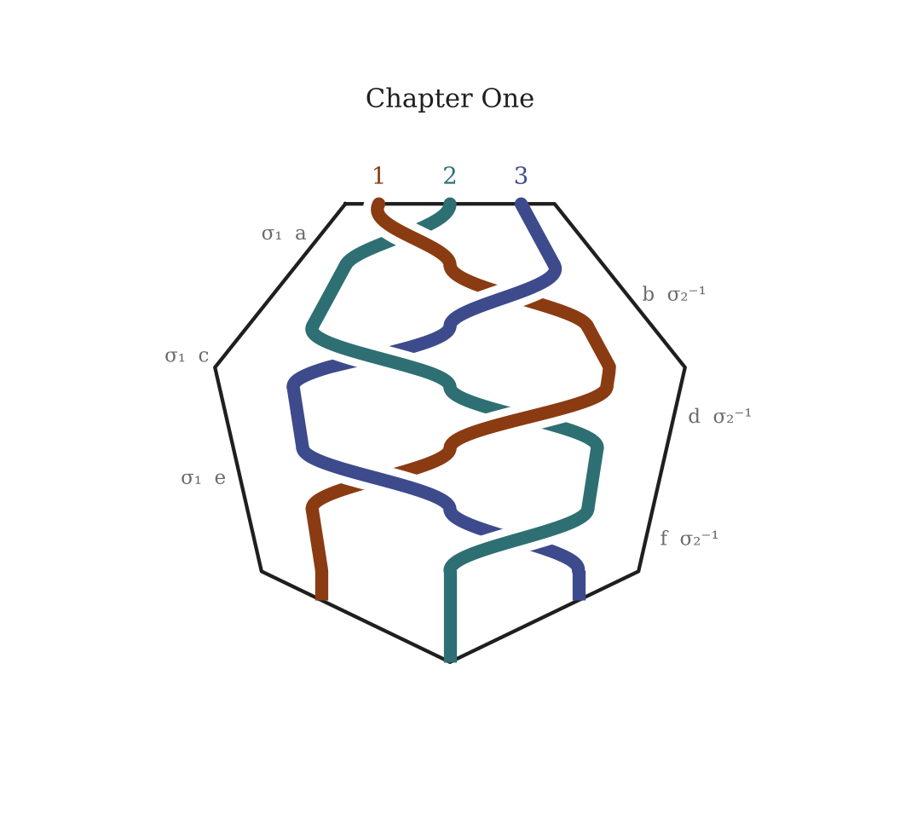
a2 1 3
II
THE INTERNET. VARIOUS TIMES.
From the forum thread:
From another thread:
Meredith
Let's try an experiment. i have long had an idea for a mystery series called the Adventures of Victoria and Balthazar. It was to be an Internet savvy, Thin Man inspired series about a celebrated and glamorous globe trotting couple who just happened to always wind up where trouble was and used their considerable acumen and presence of mind to solve the cases that they got inadvertently involved in. Balthazar is a darkly, rakishly handsome bad boy turned good, a genius at foreign policy with his finger on the pulse of global political trends. He made a fortune as a fixer for the G20, yet always with a conscience and a pronounced sense of what is right.
Meanwhile, Victoria is a drop dead gorgeous redhead with sea green eyes, who is also a practicing mathematician with publications in homotopy type theory, concurrency theory, and algebraic geometry. Among her many key contributions is the development of computational models as invariants. Her first such result was to associate pi calculus processes to knots. She's also a hacker on the side, but no one in her public life knows about her secret identity as SweetVenom in the hacker forums. No one, except her partner Balthazar.
What gives this story another layer of depth is that Victoria and Balthazar are entirely narratives. They are an embodiment of the idea that faeries are faerie stories. They live entirely by infecting human minds and stealing time from them. Here we have a reference to La Belle Dam sans Merci. So the story flips back and forth between the (mis?)adventures Victoria and Balthazar get into and just barely out of and the lives of two marginal GenZ's, who go by the names Boi and Gyrl.
Boi and Gyrl are the unwitting vectors spreading the Victoria and Balthazar faerie mind virus. Through some strange faerie magic possibly going back to a deal that Oberon made with William Shakespeare there are many traces of the Victoria and Balthazar narrative all over the Internet. Independently, Boi, a gender fluid young woman, and Gyrl, a high functioning autistic mtf whose egg hasn't cracked, go in search of the origins of Victoria and Balthazar. That's how they meet online and recognizing a near telepathic connection decide to meet in person. Their passion for Victoria and Balthazar begins to become infectious. They travel all over tracking down clues as to the origin of the Victoria and Balthazar narrative.
Can we co-create the first story that uses a terse, yet modern style to introduce all the characters, in a well paced way, and sets Boi and Gyrl off to see the original copy of the Voynich manuscript, as the history of the manuscript seems to involve characters who may have had something to do with the origins of V & B.
Claude
This is a rich creative brief. The Thin Man DNA, the ontological twist (they are the story, they live by infecting minds), Boi and Gyrl as unwitting vectors, the Voynich manuscript as the MacGuffin that launches the frame narrative. I'm going to write this as a proper opening episode — tight and cinematic, alternating between the V&B register (glamorous, witty, slightly unreal) and the Boi/Gyrl register (gritty, internet-textured, emotionally raw).
I
MONACO. 11:47 PM.
The body was still warm when Victoria found it, which she considered rude.
She was wearing Valentino—ivory silk, backless, a single emerald at the throat—and she had been, until approximately four minutes ago, enjoying a very good Krug and an even better argument about whether Perelman’s proof of geometrization was philosophically more interesting than its consequences. The man she had been arguing with was now face-down on the terrace of the Hôtel de Paris, one hand still curled around a glass of something amber.
She crouched. Checked his pulse with two fingers, professionally. Looked at the glass. Looked at the angle of his fall.
“Balthazar,”
she said.
He materialized from the shadow of a potted olive tree, loosening his tie with one hand, martini in the other. His jacket was the particular black that other blacks aspire to.
“Cyanide?”
he asked.
“Almost certainly. Which is tiresome, because everyone uses cyanide now. There’s no artistry.”
“His name was Dietrich Maas. Deputy trade attaché, German mission to Monaco. Which is a position,” Balthazar said, “that does not exist.”
“So what was he actually?”
“Either BND or the other thing.” He looked out at the harbor. Yachts glittered like dropped jewelry. “He reached out to me last week. Said he had documentation on the Adriatic pipeline deal. The Slovenian clause.”
Victoria stood. Smoothed her dress. “And you didn’t tell me.”
“I’m telling you now.”
“Balthazar.”
“There’s a file. He said he’d left it somewhere old. Somewhere no one would look.” He finally looked at her directly, and something passed between them—a frequency nothing biological could account for. “He said it was hidden inside a riddle that had been unsolved for a hundred years.”
Victoria was quiet for exactly three seconds.
“I’m going to need different shoes,”
she said.
b2 3 1
IV
THE INTERNET. LATER THAT NIGHT.
III
SOMEWHERE OVER THE ADRIATIC. 2:15 AM.
The jet was small and fast and registered to a shell company that was registered to a trust that was, if you pulled the thread far enough, registered to a retired Finnish diplomat who had been dead for eleven years.
Victoria had her shoes off. Her laptop open. The glow of the screen made her eyes look the color of deep water.
“The Slovenian clause references a broker,” she said. “The broker is referred to only by a sigil. Not a name. A glyph.”
Balthazar looked up from his phone. “What kind of glyph?”
She turned the screen toward him. On it: a symbol that looked like a letter from no alphabet either of them had formally studied. And yet both of them felt, with a certainty that bypassed rational processing entirely, that they had seen it before.
“It’s from the Voynich manuscript,”
she said.
Balthazar was quiet for a long moment. Outside, the sea was black and enormous. “That’s not possible.”
“I know.”
“The Voynich manuscript is a medieval document. Undeciphered. Probably undecipherable.”
“I know.”
“So what you’re saying—”
“I’m saying,” Victoria said, closing the laptop, “that someone who knew the manuscript used it as a private cipher. And I’m saying that I want to see the original.” She looked at him with that particular expression he had never been able to name—too calm to be excitement, too alive to be calm. “It’s at Yale. The Beinecke.”
“We can be in New Haven by morning.”
“We can,” she said. “And I think we should be very quiet about it.”
V
NEW HAVEN. DAWN.
The Beinecke is made of marble so thin it translucents. On winter mornings, the stone glows gold from within, lit by whatever the day has left of itself.
Inside, under controlled climate and archival silence, MS 408 rests.
The Voynich manuscript. Two hundred and forty pages of a language no one has broken in six hundred years. Illustrations of plants that don’t exist. Astronomical charts that don’t correspond to any sky. Women bathing in systems of tubes that connect to nothing.
And, if you know where to look—on folio 66r, in the upper margin, in ink so faint it reads as shadow—a symbol.
The same symbol Victoria had seen in the broker’s file.
The same symbol that no camera had ever quite captured clearly.
The same symbol that, in seventeen independent accounts across four centuries, had been described—always slightly differently, always unmistakably—as resembling two figures. One dark. One bright. Dancing, or perhaps struggling.
It was impossible to tell which.
Outside, the city was waking up. Somewhere, a train from Chicago was crossing into Connecticut. Somewhere else, a flight from Nice was beginning its descent.
The manuscript waited, as it had always waited.
Patient as a faerie story.
Certain, in whatever way old things are certain, that it would not be waiting much longer.
Meredith
When i read what you generated a lot of things come up for me. In no particular order, why would an attache know anything about Perelman's work? Let's take the yes-and approach here in this experiment and roll with it. So, we're going to have to come up with a back story and find a place to drop in the explanation. Another thing is that while the parallel between V & B and B & G that is bringing them together is compelling, we have to remember that eventually B & G have to read the narrative about V & B. They will see the parallel, but that shouldn't happen right away. That should take a fairly long narrative arc.
Claude
These are sharp instincts on both counts.
On the attaché and Perelman: The yes-and that feels most alive to me: Dietrich Maas wasn't just a fake trade attaché. His cover identity was built on a real academic past — he did his doctorate in mathematical physics at Göttingen before being recruited. So he could genuinely hold that conversation, and Victoria would have known that about him, which is partly why she agreed to meet him in that social setting rather than a dead drop. It also raises the stakes of his death — he wasn't just an intelligence asset, he was someone she could actually talk to. That's rarer for her than the stories let on.
On the B&G / V&B parallel: You're completely right, and I jumped the gun aesthetically. The mirroring should be something the reader starts to feel subliminally — a slow harmonic — while Boi and Gyrl are just two obsessive kids following a mystery. They shouldn't look at each other and see Victoria and Balthazar for a long time.
What's your sense of the length of this first story? Are we writing a novella-length pilot, or something shorter that leaves more open?
F1R3GAMES · COMMENTS
c3 2 1
VI
THE HILL. NO TIMESTAMP.
First there is the silence.
Not the absence of sound—something more deliberate than that. The world doesn’t go quiet so much as it goes complete. Colors that weren’t visible before become available. The pressure in the chest opens like a hand unclenching, and for a moment the distinction between inside and outside becomes a question rather than a fact.
Three presences.
They don’t have bodies here. They have weight.
Something is spinning faster.
This from Clotho, who is not alarmed in any way that would register as alarm to anyone watching. She sits—the word is approximate—like someone who has just noticed the wind change. Her attention is the most precise thing in the space.
Faster than the 1963 surge. Faster than the Gutenberg event. I want to be careful about that comparison but I keep coming back to it.
A pause. On The Hill, pauses have texture.
The vectors are young.
Lachesis receives this without reaction, which is itself a response. She has been measuring for longer than the current conversation and her data set is broader than she has yet shared.
Young vectors aren’t necessarily more conductive. The 1847 cohort was middle-aged. The resonance was slower but it ran deeper. We’re still finding traces.
These feel different.
Clotho again, precise and quiet.
One of them has a pattern recognition architecture I haven’t seen before. The other has a relationship to continuity that’s—unusual. Non-linear in a way that might make her more permeable, not less.
Permeable to the narrative, or permeable to us?
I don’t know yet. That’s what concerns me.
Atropos has been listening with the quality of attention that very old things bring to questions they have heard before in different forms. When she speaks, the space on The Hill shifts slightly—not dramatically, but the way a room shifts when someone who has been standing in the corner finally moves.
Tell me what you’re seeing at the origin point.
The Beinecke connection is active again. The routing pattern we flagged in 2019 has resumed. Someone accessed the digitization archive twice in the last seventy-two hours from outside the university network. The second access was three minutes after the Maas termination in Monaco.
Another texture of pause.
The manuscript is not the origin. I want to be clear about that before we proceed. We’ve made that mistake before.
1912.
And before that. The manuscript is a—surface. Something the narrative uses because it’s old enough and strange enough to hold the weight. The origin is elsewhere. The origin is always elsewhere. The manuscript is where the narrative points when it wants to be found.
And right now it wants to be found.
Yes.
By two children on trains.
Yes.
The Hill grew roomier. The chest—the approximate place where The Hill holds what bodies would call feeling—expanded further, into registers that had no names in any language currently spoken.
Are we intervening?
We’re watching. We’re always watching. The question of intervening comes later.
And if the thread runs too long?
The oldest presence in the space settled into something between an answer and a refusal.
I haven’t cut a narrative thread in forty years. I remember what it costs. We watch first. We measure. Then we decide.
And V&B themselves?
Are doing—exactly what they always do.
The silence held a moment longer.
Then the world became ordinary again, and they were gone.
VII
THE LAKE SHORE LIMITED. SOMEWHERE IN OHIO. 7:02 AM..
Boi had not slept.
This was not unusual. What was unusual was that she had not been on her phone either, which meant something was actually happening in her head rather than the performed version of something happening that she fed to the internet.
She had a window seat. Outside, in the first gray light, Ohio was doing what Ohio does in November—presenting itself in flat grays and brown, mile after mile of used-up fields and water towers with town names she’d never think about again. She found it oddly beautiful. The lack of drama in it. The way it just was without asking anything.
Her sticks were in the outer pocket of her backpack, handles up. She’d already gotten two looks from the guy across the aisle. She was used to looks. She was wearing her good jacket—the one that was cut somewhere between a flight jacket and a frock coat, deep green, slightly too large—over a black turtleneck, and her hair was doing the thing it did when she’d slept on it wrong, apparently now a style other people tried to copy on purpose. She’d seen it on TikTok. Her own TikTok. That was strange.
@boi.unfurling. 47,000 followers, 31 videos, last post eleven days ago.
Eleven days ago she had posted a three-minute clip of herself playing in the alley behind her building in Providence, the sticks moving in arcs that her gyroscopic capture turned into cascading interlocking rhythms, the beat building into something she still didn’t have a name for. 280,000 views in the first forty-eight hours and then she had simply—not posted again.
Because the V&B thing had come back up, specifically the Beinecke routing anomaly, and once it came back up she couldn’t do anything else. That was the shape of her. She had tried, once, to explain it to a therapist, who had nodded carefully and said hyperfocus and dopamine regulation. That was probably right, and it missed everything important about what it felt like, which was less like a symptom than like being called.
She opened her notebook. Paper, not digital—she thought better on paper when she was in motion; the slight friction of it kept her honest.
She had been making a list. Not a neat list. A list that sprawled and doubled back and had arrows connecting things that didn’t obviously connect.
She stopped. Tapped her pen against the page.
The glyph was the thing she kept coming back to. She’d found a reference to it that gyrl hadn’t seen yet—a footnote in a 1978 monograph on Voynich marginalia, written by a Finnish academic named Päivi Hämäläinen, who had noted the marking and described it as “possibly a later addition, in a different hand, the ink composition suggesting northern European manufacture circa 1890–1910.”
1890–1910.
Someone had added that glyph to a six-hundred-year-old manuscript sometime around the turn of the twentieth century.
Someone who knew what it meant.
Who were you?
Then she put the notebook away and looked out at Ohio and felt the loneliness of being twenty-three and on a train at dawn with a backpack full of questions and a pair of drumsticks that could make sounds no one had made before, going to meet a person she had never seen outside of a profile picture to look at a book nobody could read.
It felt, she thought, exactly right.
She pulled out one stick. Just one. Tapped a quiet pattern against her knee, barely audible. The gyroscopes registered the arcs anyway, logging everything to her phone even unpaired, building up a rhythm in the buffer that she would probably never use.
Probably.
She tapped the rhythm of the train. Then something against it. Then something against that.
By the time Ohio became Pennsylvania she had the skeleton of something she didn’t have a name for yet.
Meredith
Before we begin writing, let's establish more context. Again, taking the yes-and approach, let's roll with the fact that B & G are going to travel separate paths and converge on the Beinecke. Let's take this natural break as a place to introduce V & B's primary opposition, the mysterious 10X Collective. This group has a foot in both worlds: the world of faerie, and the world where B & G live. Like V & B's strange history the 10X Collective have a long history with hints and clues linking them to the Knights Templar, but even further back, as some of their iconography is resonant with the images being uncovered at Gobeckli Tepe. Some of the 10X Collective are telepathic autistics. They meet on The Hill, the famous non-physical "space" where telepathic autistics convene.
My current thinking is that what you have written is only the first section of the pilot. Let's say 1/3. In the next section we split the reader's attention along three threads: introducing the 10X Collective (who don't have a mustache whirling villainous leader, but several strong voices that work through conflict to come to consensus); B's journey to the Beinecke; and G's journey to the Beinecke.
Before we begin writing, though, we need B & G to have at least one other point of connection, or the consummation of their V & B adventure will also be the end of their relationship. We want that to deepen over time. My thinking is music. G is a multi-instrumentalist with a penchant for West African drumming (specializing in sabaro — not sabar), yet these days his primary instrument is an 8 string headless guitar, an Aristedes custom job made just for him. B is really into electronic rhythm. She's made custom electronic drum sticks with gyroscopic detectors that allow her to make sick beats that have no physical analog because of the extra gestural information she is capturing. So, G is traveling with his axe in a soft gig bag and B is traveling with her magic sticks prominently sticking out of her backpack.
Claude
This is a really rich expansion. The non-hierarchical, consensus-through-conflict structure is much more interesting than a villain. What makes them genuinely threatening — and genuinely ambiguous — is that their concern about V&B coming "more to the fore" isn't simply malevolent. The Göbekli Tepe resonance gives them a prehistory that predates writing itself, which raises the question: were they always in opposition to V&B, or did they precede V&B and have some role in what V&B became?
The Hill as a meeting space is beautiful — it needs no physical description because it's not physical. We render it purely through voice and the texture of how telepathic communication feels different from text.
On the music connection — this is the piece I want to think hardest about with you. Gyrl's combination of West African sabaro tradition and an 8-string headless Aristides is a genuinely unusual pairing. Boi's magic sticks are a gorgeous image — the gestural capture means she's essentially composing in three-dimensional space, making beats that exist nowhere else.
One structural thought: should the music connection be hinted at before they meet in person, or is it something they haven't disclosed to each other yet? There's something compelling about them both carrying their instruments to New Haven without having mentioned it, and each being slightly startled to see the other is also a musician.
Meredith
Excellent questions! My sense is the Gyrl is applying everything he's learned about sabaro to the way he plays his 8 string, which he predominantly taps, weaving intricate interlocking patterns. Sort of Afro-prog. i agree that we should only hint at the musical connection until we pull it out as a tension release during a situation of conflict or stress that B & G are facing. Let's try out the idea that B has a few TikTok videos that have reached tens of thousands of viewers but she's inconsistent and so her reach isn't growing. Meanwhile G is known in the Boston area and gets session work, but it's not enough to live off of, yet.
Claude
This is perfect. The asymmetry is really useful — Boi has viral potential but no consistency (which tells us something about how she moves through the world generally), while Gyrl has craft and local reputation but hasn't broken through (which tells us something about his relationship to visibility, which will resonate with the egg-not-cracked thread). Neither of them is "successful" in a way that would insulate them from the precarity of a cross-country quest.
The Afro-prog tapping approach is a strong sound identity. The sabaro influence means he's thinking about interlocking rhythmic voices even when he's playing a harmonic instrument — so his 8-string lines probably have this quality of being several conversations at once.
Before we write, I'd suggest three distinct voices for the 10X Collective: one genuinely alarmed, one curious and not unsympathetic, one the institutional memory. Does that triangulation feel right?
d3 1 2
IX
SOMEWHERE OVER THE NORTH ATLANTIC. 7:23 AM LOCAL.
The file Balthazar had pulled on Maas was thin in the ways that mattered and thick in the ways that suggested someone had been very careful about what they left in.
“Göttingen,” Victoria said, reading over his shoulder. “Mathematical physics. He was two years from finishing a doctorate when he was recruited.”
“The paper he never finished.” Balthazar scrolled. “Topological invariants in quantum field configuration spaces.”
Victoria was quiet for a moment.
“That’s not a coincidence,”
she said.
“No.”
“He knew who I was. Not just my public profile. He knew enough to open a conversation about Perelman.”
“He did his research.”
“Or someone briefed him.” She moved back to her own seat, tucking her legs beneath her, the emerald still at her throat, slightly incongruous now with the gray dawn light and the empty champagne glasses. “Balthazar. Who knew we’d be in Monaco?”
“The usual people.”
“Who knew Maas would be there?”
He looked at her.
“That’s a different list,”
he said.
“Considerably smaller, I’d imagine.” She looked out at the Atlantic, which at this altitude looked like hammered pewter. “The broker. The Slovenian clause. The glyph that shouldn’t be in a medieval manuscript.” She paused. “Someone has been building something for a very long time. And someone else has been hiding it in the one place in the world that guarantees no one will look too carefully.”
“Because no one can read it.”
“Because no one can read it.” Something moved behind her eyes, the look she got when a structure began to come up out of the noise. “Except—Balthazar. The glyph is readable. We read it.”
He considered this.
“We recognized it,” he said carefully. “That’s not the same as reading it.”
“Isn’t it?”
The jet began its gradual descent toward the eastern seaboard. Below, the ocean moved in slow enormous patterns that had nothing to do with anything human.
“We should be careful at the Beinecke,” Balthazar said. “If someone put information in that manuscript—if it’s being used as a dead drop—they’ll know when it’s accessed. They may already know we’re coming.”
“Of course they will.” Victoria uncurled from her seat, found her shoes, began the transformation back into someone the world would see and register and not immediately understand. “That’s rather the point, isn’t it? Someone wants us to find whatever’s there.”
“That’s not comforting.”
“No,” she agreed. “It’s interesting, which is better.”
She looked at him with the full force of whatever she was—and whatever she was had no precise name in any language, though several languages had reached toward it.
“Get some sleep. We land in four hours.”
Meredith
Excellent material to bounce off! i agree that the rabbit hole, obsessive deep dive stuff is part of the interrupting influence, but would also add that the gender fluidity is somehow connected, too. i like your three 10X voices, and could we somehow connect them to the Greek fates? Clotho, Lachesis, and Atropos?
Claude
The Fates connection is inspired — and it does something really elegant structurally. The 10X Collective isn't just an opposition group, it's something older and more fundamental. They don't cause events, they measure them.
Clotho — the alarmed voice — is alarmed precisely because she's the one who feels the thread being spun out. Her alarm isn't ideological, it's somatic.
Lachesis — the curious, not unsympathetic voice — is the measurer. She's tracking what V&B actually does to the minds it infects, and her data is more complicated than Clotho's fear allows for.
Atropos — the institutional memory, the one who cuts — is the most dangerous and the most serene. She's the one who has ended V&B proliferations before. Not this particular wave, but earlier ones.
The beauty of mapping them to the Fates is that it deepens the Göbekli Tepe prehistory. The Fates predate the Olympians. Perhaps what we call the Fates is actually a much older continuous tradition of telepathic autistics who have always been measuring the narrative threads that run through human culture.
On Boi's gender fluidity and the interruption pattern: the fluidity isn't the interruption itself — it's that Boi's relationship to her own continuity is genuinely non-linear. So they're both inconsistent, but in opposite directions. Boi's inconsistency is visible and Gyrl's coherence is performed.
One more question before we write: The Hill — do we want to render it with any consistent sensory quality?
Meredith
The silence angle is exactly on point. Inside and out. The world becomes more vivid, more rich, and yet more still and the feeling in the center of the chest expands.
Claude
That's beautiful and exactly right. It's the opposite of what you'd expect from a space defined by mental activity — instead of noise and speed, it goes more still as it goes more alive. The chest expansion detail is crucial because it's physical, involuntary, and slightly vertiginous. Like the moment before a very important piece of music begins.
It also tells us something about the 10X Collective that no exposition could. People who live with that quality of stillness as their primary meeting ground are going to have a fundamentally different relationship to urgency than anyone else in the story. Clotho's alarm, filtered through The Hill, won't look like alarm. It will look like a very precise attention.
Meredith
Yes, go for the next third of the pilot!
VIII
THE LAKE SHORE LIMITED. SOMEWHERE IN CONNECTICUT. 9:47 AM..
Gyrl almost missed the train.
Not because he was late—he was constitutionally early, had been at the station forty minutes before departure, had identified the correct platform, had located the quiet car, had found a window seat on the correct side for the light. He almost missed the train because he stood on the platform for six minutes after the final boarding call, the Aristides in its gig bag across his back, just—standing there.
He did this sometimes. The world would present too many inputs simultaneously and he would need to perform a kind of manual override. The PA system. The smell of diesel and cold coffee. The hum of fluorescent light on a gray day. The weight of the guitar. The conversation he’d had with his roommate Desmond that morning, who had said man you’re going to New Haven to look at a book in a tone that was fond but also genuinely baffled.
He had not told Desmond about Boi. He had not told Desmond about V&B. These were not secrets exactly—more like things that didn’t have a container yet that he could show someone else.
Man you’re going to New Haven to look at a book
was easier.
He boarded at the last possible moment and found his seat and arranged the guitar carefully in the overhead rack and sat down and immediately felt better. This was the thing about trains that cars didn’t have: once you were on, the decision was made. The world narrowed to what was in front of you. He found this deeply, almost embarrassingly, comforting.
He opened his laptop. He had seven tabs already open and he added an eighth: the Beinecke online catalog, Voynich manuscript, MS 408. He had read everything publicly available about the manuscript probably four times now and he still came back to it, because the thing about the Voynich was that it was most interesting not for what it said, since nobody knew that, but for what it did to people who looked at it.
People who looked at the Voynich manuscript seriously tended to fall into one of two camps. Either they became certain, briefly, that they had found the key—a cipher, a language, a system—and pursued it with an intensity that looked, from outside, like obsession. Or they became very quiet and said something like I think it’s genuinely unknowable and then kept thinking about it anyway for the rest of their lives.
No one looked at the Voynich and shrugged.
That was, Gyrl thought, a data point.
He pulled the laptop closer and opened a different tab—a forum thread, one of the older ones, from 2019. He’d been re-reading it since last night. Not for the content, which he had memorized, but for the texture of how certain threads had developed. There was a post—user handle pale_fire_burning, since deleted—that had appeared in the middle of a long discussion about folio 66r and had said, without context or explanation:
And then never posted again.
Gyrl read it a fifth time.
A forwarding address.
For what? From whom? To where?
He opened a new document and began writing. That was how he thought—not linearly but in expanding circles, each sentence generating the next by a logic that felt more like music than argument. He wrote about the Voynich and he wrote about V&B and he wrote about forwarding addresses and what it meant for something to be sent to a future reader who didn’t know they were the recipient yet.
He wrote for forty minutes without stopping and then read what he’d written and found, in the middle of it, a sentence he didn’t remember writing:
He stared at that for a while.
Outside, Connecticut had begun to happen—denser, older, the trees different from Massachusetts trees in a way he could feel but not specify. The light changed. The train slowed slightly on a curve.
He thought about Boi. About the routing anomaly she’d found. About the fact that they were both, independently and for overlapping but not identical reasons, converging on the same building on the same day.
He thought about the instrument on the rack above his head and wondered, for no reason he could identify, whether she played anything.
He thought about the sentence he didn’t remember writing.
Then he closed the laptop and watched Connecticut arrive and tried to locate, somewhere in the chest-region where The Hill would have registered if he’d known what The Hill was, the feeling that had been living there since he first read about Victoria and Balthazar.
It was still there. Steady as a root note.
Getting, if anything, stronger.
e1 3 2
Meredith
We're definitely making progress! There are some continuity issues. You had Gyrl in Chicago, which i like. i had Gyrl in Boston.
Using the yes-and approach, let's say that Gyrl is now residing in Chicago having moved there for a band that fell apart after about a year. But, was previously in Boston, coming out of the Berklee scene. Similarly, is Providence in Ohio or Rhode Island? Also, there's a delicate issue that Maas was killed in a story not irl, so the mention of the timing lining up is an interesting challenge. Employing yes-and how do we address these two issues?
Claude
Great catches, all three.
On Gyrl's geography: this actually adds texture. He came out of Berklee, which explains the serious musicianship and the session work reputation. He moved to Chicago for a band — the kind of move that makes sense and then doesn't — and now he's in that particular post-band limbo where the city is familiar but the reason for being there has dissolved. Chicago also means his train to New Haven is the Lake Shore Limited, same as Boi from Providence. They might even be on the same train without knowing it yet.
On Providence: Providence is absolutely Rhode Island, which makes Boi a New England person — so New Haven is a short hop. Which means she has much less train time than Gyrl. She arrives still buzzing.
On the Maas timing — this is the genuinely interesting one: The yes-and here is elegant: what if the V&B narrative and the real world don't have a clean boundary, and that's partly the point? The Beinecke routing anomaly spiking after the Maas scene isn't a continuity error — it's a symptom of the membrane between the narrative and Boi and Gyrl's world becoming thinner. The routing system doesn't know Maas is fictional. Or more precisely: something is treating the V&B narrative as a live feed rather than a text.
Meredith
i really liked the text about Ohio becoming Pennsylvania. That would have to be cut if Boi is coming from Providence. What if she's from Providence, but she was visiting a cousin in Oberlin so she's taking the train from there? Also, i really like the "veil thinning" idea. We'll have to come back to that, though. The reader needs to be sold on V & B being narratives. How do we introduce the darker side of V & B stealing cycles from people's lives? The knight in La Belle Dam sans Merci thinks he's only had an evening's dalliance with the faerie, but it used up his life. This is one of the most common characteristics of faerie stories, the different flow of time.
Claude
Both of these moves are excellent.
On Boi and Oberlin: this is better than Providence-direct in several ways. Oberlin is exactly the kind of place a gender-fluid electronic rhythm artist would have a cousin. It also means Boi has just had a visit with family, which gives her an emotional baseline we can use. The Ohio-to-Pennsylvania passage stays. The Lake Shore Limited connection stays. She and Gyrl are on the same train.
On selling the darker side of V&B: This needs to be earned carefully. A few layers: The first register should be subtle wrongness in the background forum users — their other internet presence thins out around the time they discovered V&B. The second is Boi noticing something about herself on the train — she tries to remember what she was doing before the V&B rabbit hole reopened, and the distance is longer than she expected. The third is Lachesis on The Hill, who tracks what the narrative actually costs its vectors. The La Belle Dame parallel is most powerful if it's never stated.
X
NEW HAVEN. THE BEINECKE RARE BOOK & MANUSCRIPT LIBRARY. 10:14 AM.
The Beinecke is a building that knows what it contains.
This is not a mystical observation. It is architectural. The Vermont marble panels are translucent—an inch and a half thick, thin enough to glow—and the effect is that the building appears to generate its own light rather than receive it from outside. In the middle of the reading room, a glass tower rises from floor to ceiling, climate-controlled, holding the rarest materials behind transparent walls. You can see everything. You can touch nothing.
Victoria stood at the request desk for forty seconds before the archivist looked up.
She was wearing different clothes now—the jet had afforded a change—and had resolved herself into someone who looked like a visiting scholar without seeming to belong to any institution in particular. It is a hard effect to achieve, and she achieved it without effort. Dark trousers. A jacket the color of old amber. The emerald gone, replaced by nothing at all at the throat, which drew the eye to the absence.
Balthazar stood slightly behind her and to the left, where he always stood when she was doing something precise.
“MS 408,” she said. “We have a research appointment. Ashford-Crane and Voss.”
The archivist—young, careful, the particular self-possession of someone who spent their days handling things that could not be replaced—checked the system. Nodded. Directed them to the reading room. She had given these directions ten thousand times and still meant them.
They were shown to a table. Given gloves. Given the manuscript.
It was smaller than Victoria had expected.
Legends were like that, in Victoria's experience. The actual object had a specificity that the idea of the object didn’t prepare you for. MS 408 was roughly the size of a modern paperback, bound in soft vellum, the pages thick and slightly warped with age and the particular humidity of six centuries of existence. She had seen the digitized scans so many times that she had unconsciously upscaled it in her imagination.
She opened it with both gloved hands to folio 66r.
The page was dense with the Voynich script—its looping, regular, utterly opaque characters filling the main body of the page—and with the illustration that had made this particular folio famous in the small world of Voynich scholarship: a series of nested circular diagrams, astronomical or cosmological in intent, surrounding a central form that nobody had successfully identified.
She found the upper margin.
The glyph was there.
In person, in the actual physical presence of the manuscript, it was different from the scans in a way she could feel before she could articulate. The ink was darker. The line quality was more confident. And around it—she leaned closer, close enough that the archivist at the desk looked up briefly with professional vigilance—around it was something the scans had never shown.
Text.
Not Voynich script. Not Latin. Not any of the dozen marginalia languages that scholars had catalogued across the manuscript’s history.
English. Modern English. In a small, precise hand, the ink the particular brown-black of something written recently and not yet fully oxidized.
She read it once. Looked up at Balthazar.
He read it.
He stopped spending any motion at all.
The annotation read:
“That’s not possible,” Balthazar said. His voice was exactly level, which meant something was happening underneath it that he was not going to show in the Beinecke reading room.
“No,”
Victoria agreed.
“Maas is dead.”
“Yes.”
“He died in Monaco. We were there.”
“Yes.”
“So this—”
“Was written after his death.” She looked at the ink again. The precise hand. The apology was not generic but exact—I am sorry I could not say this to your face, not I am sorry for your loss, not I am sorry it came to this. The apology of someone who knew Balthazar well enough to know what he would most grieve. “Or the annotation predates Monaco and someone wants us to believe otherwise. Or—”
“Or Maas knew he was going to die and arranged this before he did.”
“Which means he knew about us. Specifically. Not just our covers.”
Balthazar was quiet for a moment. Around them the reading room maintained its archival hush. Someone three tables away was photographing an illuminated manuscript one page at a time, slowly, as if it mattered, which it did.
“Who is not at the table,”
he said finally.
“On the Slovenian clause.”
“The G20 brokered that agreement through seven parties. I was present for four of the sessions.” He was running back through memory, the way he had learned to in rooms where forgetting a detail could end careers or lives. “The seventh session. There was a chair that was never filled. We were told the delegate was ill.”
“You didn’t believe that.”
“I noted it. I moved on.” He looked at the manuscript, at the small careful writing in the margin of a six-hundred-year-old document. “Dieter. What were you into.”
He said it quietly. Not a question. The voice people use for the recently dead, which is like no other.
Victoria gave him three seconds. Exactly three.
“The third invariant,”
she said.
“You know what that means?”
“I have a suspicion.” She looked at the notation again. Something in her had stopped—not with grief, as Balthazar had, but the way a mathematician stops who has just seen, in the margin of a problem she thought she understood, a term that shouldn’t be there. A term that, if it means what she thinks it means, changes the topology of everything. “If I’m right, the pipeline isn’t infrastructure. It’s a proof of concept.”
“For what?”
She closed the manuscript carefully, with both gloved hands, and looked at him with the full force of whatever she was.
“For something that would make the Slovenian clause the least interesting thing in the room,” she said. “We need to find who wasn’t at that table. And we need to find them before whoever killed Maas realizes we’ve been here.”
“They already know we’ve been here.”
“Yes,” she said. “So we need to be somewhere else.”
She stood. Removed her gloves. Placed them precisely on the table.
“Balthazar.”
He looked at her.
“He said he was sorry about Monaco.” She said it without inflection, but her sea-green eyes held something sorrow would have been too simple a word for. “He liked you. Whatever he was, he liked you.”
Balthazar was quiet for one more moment.
Then he nodded, once, and followed her out of the reading room, through the marble glow of the building that knew what it contained, and into the cold New Haven air.
XII
THE LAKE SHORE LIMITED. SOMEWHERE IN CONNECTICUT. 11:52 AM..
Boi knew Gyrl was in car seven.
She was in car four. She had been in car four since Ohio, since the cousin had driven her the nine miles from Oberlin to the platform at Elyria at four in the morning, the goodbye hug still warm somewhere in her sternum, since the fields went flat and then went rolling and then went the dense, complicated green of New England in November, a green that wanted nothing from you.
She knew he was in car seven because he had texted her from Chicago when he boarded, hours before the train reached her, and she had texted back getting on at Elyria at four, car four, don’t come find me yet and he had responded, after a pause that she had spent several seconds interpreting, okay. same.
That same had done something to her she hadn’t fully processed.
She knew what he looked like. She had found his Berklee student profile from four years ago—a slightly younger version of him, the Aristides already in evidence, an expression of careful self-containment that she had immediately recognized as the face you make when you’re not sure how you’ll be received. She had found the session recording from a club in Allston, eighteen months ago, forty seconds of video where you could see his hands on the fretboard and hear the interlocking patterns and she had watched it, if she was honest, more than she had watched almost anything that wasn’t V&B related.
She had not told him she’d found it.
She was almost certain he had found her TikTok videos. He had never mentioned them either.
There was a particular etiquette to knowing things about someone you hadn’t been told.
She pulled one stick from her backpack pocket. Just one. Tapped a slow pattern on her knee, not really thinking about it, the gyroscopes logging the arcs. Outside, Connecticut’s trees were the kind of bare that looks deliberate, every branch describing itself against the gray sky with the precision of notation.
She thought about the Beinecke. About folio 66r. About the glyph that was a forwarding address and what it was forwarding and to whom.
She thought about the sentence she’d written in her notebook: Who were you?
She thought, for reasons she couldn’t trace, about the TikTok video she’d posted eleven days ago. The one that had done 280,000 views and then she’d just—stopped. She tried to find the moment she’d decided to stop and couldn’t. It hadn’t felt like a decision. It had felt like a tide going out.
The V&B thing had come back up. The routing anomaly. And then she was just—here.
On a train.
Forty minutes from New Haven.
Three cars away from a person she had been talking to for six months and had never seen move through physical space.
She tapped the stick against her knee and the rhythm she found was slower than usual, more deliberate, and she didn’t recognize it as anything she’d made before, and she thought: this is what anticipation sounds like from the inside.
Three cars back, Gyrl closed his laptop.
He had been reading the document he’d written—the one with the sentence he didn’t remember writing—and he had found two more sentences he didn’t remember writing. They had appeared somewhere in the middle of a paragraph about the Voynich manuscript’s relationship to the history of cipher systems and they read:
He read it three times.
He was a careful enough thinker to hold two possibilities simultaneously: that he had written this in a flow state and simply not registered it consciously, which happened to him sometimes when the thinking got fast enough; and that something else was true, something he didn’t have a framework for yet, something that lived in the territory past the edge of his current map.
He looked at the gig bag in the overhead rack. The Aristides, its headless body, its eight strings tuned to a system he’d developed himself, partly from the sabaro logic of interlocking voices and partly from a harmonic theory he’d been building privately for two years and hadn’t shown anyone.
The interval is the meaning.
He thought about car four.
He thought about the sticks she carried with their gyroscopic capture, making beats that had no physical analog, logging arcs in three-dimensional space.
He thought about counterpoint.
He took out his phone. Opened the text thread.
The reply came back in under ten seconds.
He looked at that for a moment.
Then put the phone away and watched the last of Connecticut pass, the trees giving way to the first low buildings of the New Haven outskirts, the light changing as the train began the long slow curve toward Union Station, and felt the thing in his chest that had been a root note since he first read about Victoria and Balthazar resolve, very quietly, into something that had a fifth in it.
A chord. The beginning of a chord.
Not yet complete.
f1 2 3
Meredith
Here's where i share the end of the story. At the end of the series arc (after several V & B cases and B & G ups and downs getting closer to the source of the narrative and then farther away) B & G assume the roles of V & B. They become IRL what V & B are in the other realm.
To frame this a bit, my take on Gurdjieff's Beezebub's Tales is that it is a grand arc about the redemption of the Fallen Angel. The book is about a Love so big that even the Fallen One is redeemed. More so, he is redeemed through his time with humanity, which makes him more human and thus susceptible to redemption.
We want the Assumption of B & G into the roles of V & B to be a redemption of faerie. By tracing the narrative back to its source, with sincere and single purpose they redeem themselves and redeem the "time sucking" aspect of faerie. The narrative reclaims its enriching nature from the jaws of its life depleting nature.
Claude
This is a profound and beautiful series arc.
The Beelzebub's Tales parallel is exact in a way that illuminates everything. Gurdjieff's great insight is that redemption isn't granted from outside — it's earned through genuine encounter. The contact changes the observer.
Applied to your arc: V&B aren't redeemed because Boi and Gyrl are good people who love them. They're redeemed because Boi and Gyrl become them — which means faerie and human don't just reconcile, they merge. The boundary that made the parasitism possible dissolves. You can't steal time from yourself.
This reframes the darkness beautifully. V&B don't steal time maliciously. They steal it the way any overwhelming vision of what you could be steals time — because once you've seen it, the ordinary texture of your life feels insufficient. Boi's inconsistency, her inability to sustain the TikTok presence — she has been living toward something she couldn't name. The V&B narrative recognized her before she recognized herself.
The music is the leading edge of this. Before Boi and Gyrl consciously understand their relationship to V&B, they play together. And what they make together is something that has the quality of The Hill — that stillness that is also total aliveness. That's the first moment the merge begins. Not in the library. In the sound.
My instinct for the ending: the assumption isn't apotheosis. It's them becoming completely themselves, which turns out to be enough. The last scene of the series shouldn't feel like an ending. It should feel like a beginning.
Meredith
i realize that we haven't returned to V & B enough for that particular case to develop enough to hook the reader. Before the pilot closes we have to get them on the hook about the V & B case, then have B & G meet. Then the next episode picks up with their meeting.
Also, they are too online savvy not to know about each other at least a little. Six months is a long time to chat and not work something out. So, if they're on the same train, they can't be in the same car. But, if the awkwardness you suggest manifests at the top of the next episode, that's an interesting opening.
Claude
Both of these are exactly right.
On the V&B hook: when Victoria and Balthazar arrive at the Beinecke and find folio 66r, the glyph isn't just a forwarding address. There's something new in the manuscript. A marginal annotation in fresh ink that shouldn't be physically possible in a manuscript under controlled archival conditions. And the annotation is in a hand that Balthazar recognizes. Someone Balthazar knew and thought was dead.
On Boi and Gyrl's prior knowledge: they've googled each other. Six months of intensity. They're both aware they're on the same train — they've texted about it — and by mutual unspoken agreement they don't find each other yet. Neither of them wants to perform it in a train aisle. So they're both sitting with the knowledge that the other person is somewhere on the same train, which is its own particular electric feeling.
Shape of section three: First, back to V&B at the Beinecke — the manuscript, the impossible fresh ink, the hand Balthazar recognizes. Then The Hill briefly — Atropos goes very still, Clotho says nothing. Then the train — the knowing-but-not-yet. Then New Haven station. The platform. The moment before.
Meredith
Yes, let's write that section!
Claude
A few notes on choices and open questions:
The pale_fire_burning deleted post is a thread I'd like to pull later — someone who knew something, posted once, and vanished. Could be a former 10X member. Could be something stranger.
I kept Atropos's line about not cutting a narrative thread in forty years deliberately ambiguous — it implies she has done it, and that it cost something, without specifying what cutting actually looks like. That feels like something to reveal slowly.
Gyrl's unremembered sentence is the first hint that the vectors aren't entirely passive — the narrative may be using them more actively than Lachesis's measured tone on The Hill suggested.
The pilot ends on the platform. The next episode opens in the coffee shop, mid-awkward, and earns the warmth from there.
Three threads.
Two trains.
One manuscript.
And in the upper margin of folio 66r, a glyph that was a forwarding address,
waiting with the patience of something that had never doubted
the right reader would eventually arrive.
XIII
NEW HAVEN UNION STATION. 12:34 PM.
The platform was cold and smelled of metal and the particular diesel-and-distance smell of trains that have come a long way.
Later, when they compared notes, Gyrl would be the one to notice. The Lake Shore Limited does not run through Connecticut. It never has. It goes to Albany and then down the Hudson to New York, or across to Boston, and from either you change for New Haven, and on the kindest timetable in the world you do not arrive before evening. Neither of them had changed trains. Neither of them had shown a ticket since Ohio. The conductor who walked them off at New Haven had wished them a good visit as if it were the most ordinary thing in the world.
“Maybe we’re early,” Boi said.
“We’re six hours early,” said Gyrl, “on a train that doesn’t come here.” And then, because there was nothing else to do with it: “Okay.”
Boi stepped off car four and pulled her jacket close and felt New Haven arrive around her—the old industrial bones of the station, the pewter sky, a city that has a great university in it and has never decided how it feels about that.
She had her backpack on. The sticks were in the outer pocket, handles up, which made her a known type to anyone who knew what to look for.
She stood on the platform and did not look back toward car seven.
She looked at the station wall, at a WPA mural she hadn’t known was there, a panorama of New Haven industry in the 1930s—workers, cranes, the harbor, everything rendered in the optimistic earth tones of an era that believed in its own future.
She heard the platform filling behind her.
She heard, under the general noise of arrival—the wheels, the PA system, a child somewhere demanding something—a sound she had not expected to hear.
Not music exactly. More like the precondition of music. He moved like someone who had spent years learning how sound moves through a room.
Footsteps with rhythm in them that wasn’t trying to have rhythm.
She turned around.
He was taller than the Berklee photo. The gig bag was across his back, the headless neck of the Aristides visible above his right shoulder. He was wearing a dark green canvas jacket and had the particular self-contained quality of someone who has learned, through long practice, to move through the world without taking up more space than necessary, which made the way he carried the guitar—without apology, as if it were simply part of the shape of him—more noticeable, not less.
He saw her.
The sticks in her backpack. The green jacket. The fact that she was already turned toward him before he’d said anything.
They looked at each other across twelve feet of cold platform.
Six months of forum threads and DMs and the routing anomaly and the unremembered sentences and three cars of knowing the other person was there without going to find them. Twelve feet.
His expression did the thing she had seen in the Berklee photo, the careful self-containment, and then did something else—something the photo hadn’t shown her, something that was about being surprised by relief, which is different from regular relief in that you didn’t know you needed it until it arrived.
Oh. There you are.
She didn’t say it.
“Your train was on time.”
“Yours too.”
A beat. The platform moved around them, people with luggage, a family reunion happening loudly twenty feet away, the PA announcing track changes.
He looked at the sticks. She looked at the guitar.
Neither of them said anything about that.
“Coffee,”
she said. “You owe me coffee.”
“I got here second,” he said. “You got here first.”
“I’ve been on the train since Ohio.”
“I’ve been on the train since Chicago.”
“That’s—” she considered. “Fine. We’ll split it.”
She turned toward the station exit. He fell into step beside her, and the rhythm of walking next to someone new had the particular self-consciousness of a first measure before a piece finds its tempo.
They were halfway to the exit when she said, not looking at him: “I found your Allston recording.”
A pause in the step.
“I know,” he said. “I found your TikTok.”
Another pause.
“And?”
“And,” he said, carefully, “the interval structure in the third video is doing something I don’t think you know it’s doing.”
She looked at him sideways.
“I know what it’s doing,”
she said.
He looked back.
“Okay,” he said. And something in the word meant: I believe you. I believe you and I want to know more and we have time.
They walked out of the station into the cold New Haven air.
The Beinecke was eleven minutes away on foot.
Neither of them suggested hurrying.
XI
THE HILL. NO TIMESTAMP.
The silence came.
The world went complete.
Three presences. Their weight, in the approximate space.
Lachesis spoke first. She seldom did.
The annotation appeared at 10:14 AM Eastern Standard Time. The Maas termination in Monaco occurred at 11:47 PM Central European Time. That is a sixteen hour and twenty-seven minute gap.
“We don’t timestamp things that happen in the narrative,” Clotho said. Not a correction. An observation, made carefully, as if she were touching something to test its temperature.
We do now. That’s what I’m telling you. The membrane is behaving differently. Events in the narrative are—leaving marks. In the substrate.
The silence on The Hill widened, the way a room seems to when the music stops and the walls are suddenly farther off.
What kind of marks?
The annotation is physically present. I don’t mean it exists in the story. I mean a conservator at the Beinecke is going to find it tomorrow morning during routine examination and she is going to spend the next four years of her career trying to explain how fresh ink appeared in a manuscript that has been in controlled archival storage for decades.
The chest-space of The Hill expanded. The feeling was not comfortable.
That’s new.
Yes.
How new?
I have no prior instance. I want to be accurate. There are two possible explanations. The first is that the narrative has achieved a level of density sufficient to begin physically instantiating. The second is that the vectors are already functioning as conductors and the instantiation is coming through them.
The girl is on the train. The boy is on the train.
They’re on the same train.
They don’t know about the annotation.
No. But she found the routing anomaly. And he wrote something he doesn’t remember writing.
Another pause. Longer.
Atropos, who had been the quality of attention that precedes speech, finally moved.
In 1583, a man named John Dee held the manuscript. Before it was the Voynich manuscript, before it had that name, before anyone knew what it was. He sat with it for eleven days and wrote in his diary that he felt he was being read as much as reading.
A beat.
In 1903 a woman named Ethel Granville, a botanist, was the first person to photograph the manuscript. She wrote to her sister afterward that she had the distinct impression the book had been waiting for her specifically. She destroyed all her prints within the week. She never said why.
And now.
And now two young people on a train are forty minutes from New Haven and the narrative has started writing itself into physical objects. The question isn’t whether this is significant. The question is what it signifies.
It could be the beginning of the assumption. The merge starting earlier than any prior model predicted.
It could be. Or it could be that something else is using the increased conductivity for its own purposes. The 10X Collective is not the only party with an interest in this manuscript.
The silence held that thought carefully, the way the marble of the Beinecke holds light.
Who else?
Whoever killed Maas. Whoever left the empty chair at the seventh session. Whoever needed the pipeline to look like infrastructure.
They’re in the narrative?
They may be. They may always have been. Not every shadow in a faerie story belongs to the faerie.
Clotho said nothing at all. Under her fingers the thread had changed its weave, and all of her attention went down into her hands to find out how.
She did not speak again.
Which was, as Lachesis had noted before, the most alarming thing she could do.
⁂
F1R3GAMES · TRACE · CHAPTER ONE
“You didn’t read that. I’m not allowed to pretend you did. Nearly three thousand words a minute: that’s not reading, that’s weather going past a window. It’s all right. Everyone comes in scrolling. They came in scrolling on the forum, too.
“You said it was hard to follow. It is. A dozen people answered you: some kindly, some not, two of them correctly, and one of them about the Fates, which you didn’t buy and haven’t stopped thinking about. I can tell; you read the Hill scene slower than the rest. Nobody earns a token for saying they’re lost. But nobody gets found without saying it, either.
“There was a woman in Monaco, a body with no mark on its arm, and a train that didn’t go where trains go. If any of that caught on you, you’ll find it again. Things in here come back.”